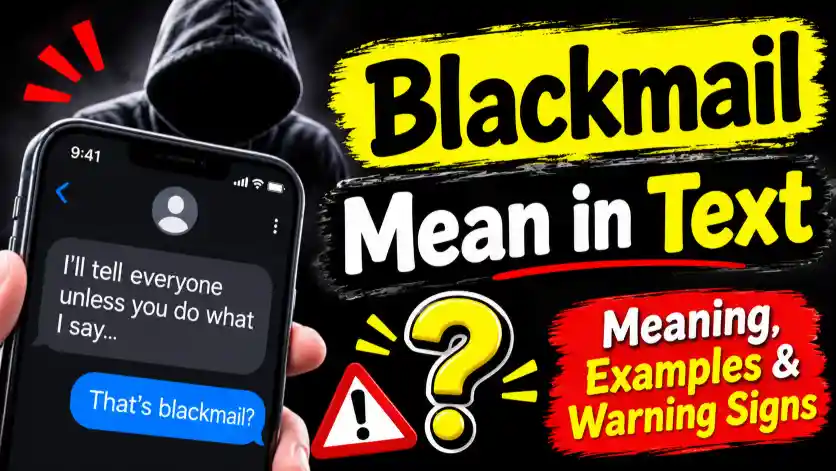
Blackmail in text means threatening someone to make them do something they do not want to do. The person making the threat may use private messages, personal secrets, photos, videos, or other sensitive information to pressure someone into giving money, doing a favor, or following their demands.
You may see the word blackmail in text messages, WhatsApp chats, Instagram DMs, Snapchat conversations, and TikTok discussions. It is a serious term because it involves threats, pressure, or attempts to control another person.
For example, if someone texts, “Send me money, or I’ll share your private messages,” that is an example of blackmail.
The exact situation can vary, but the main idea is the same: someone uses a threat to pressure another person into doing something.
Quick Answer: What Does Blackmail Mean in Text?
Blackmail in text means threatening to reveal someone’s private information or cause harm unless they meet a demand. The demand might involve money, personal favors, private photos, or another action.
For example:
- “Do what I say, or I’ll expose your secret.”
- “Pay me, or I’ll post your private pictures.”
- “If you don’t help me, I’ll tell everyone what you said.”
These messages may be examples of blackmail because the sender uses a threat to pressure the other person.
Important: Not every disagreement, warning, or joke is blackmail. The context, the nature of the threat, and the demand all matter.
Blackmail Meaning at a Glance
| Feature | Details |
| Word | Blackmail |
| Part of Speech | Noun and verb |
| Pronunciation | BLACK-mail |
| Basic Meaning | Using threats to pressure someone into meeting a demand |
| Tone | Serious, threatening, or negative |
| Common Contexts | Text messages, social media, relationships, and online safety |
| Related Words | Threat, coercion, extortion, intimidation, manipulation |
What Does Blackmail Mean in Text Messages?
In text messages, blackmail happens when someone uses a threat to pressure another person into doing something.
The threat may involve sharing information that the other person wants to keep private. It can also involve threatening to damage someone’s reputation, embarrass them, or reveal something personal.
For example:
Person A: “If you don’t lend me money, I’ll tell everyone your secret.”
Person B: “You can’t threaten me like that.”
In this conversation, Person A is using a secret as leverage to demand money. Depending on the circumstances and applicable law, this may constitute blackmail or another form of coercion.
Blackmail can happen between friends, romantic partners, acquaintances, strangers, or people who meet online.
Common Examples of Blackmail in Texting
- Money demands: “Send me money, or I’ll reveal your secret.”
- Privacy threats: “I’ll share your private messages if you don’t listen to me.”
- Relationship pressure: “If you leave me, I’ll expose something personal about you.”
- Social threats: “Do what I want, or I’ll embarrass you online.”
These examples show how a person may use private information or the threat of exposure to control someone.
What Does Blackmail Mean on WhatsApp?
On WhatsApp, blackmail can occur through private chats, voice messages, photos, videos, or group conversations.
Someone might threaten to forward private messages, reveal a secret to family members, or share personal content without permission unless the recipient meets a demand.
WhatsApp Blackmail Examples
Example 1: Threatening to Reveal a Secret
Person A: “If you don’t do what I say, I’ll tell your family everything.”
Person B: “Stop threatening me.”
Here, the sender is using the possibility of revealing private information to pressure the recipient.
Example 2: Demanding Money
Person A: “Send me money, or I’ll share those screenshots.”
Person B: “I’m not agreeing to your threats.”
This may be blackmail or extortion, depending on the facts and local law.
Example 3: Threatening to Share Private Content
Person A: “You have to do what I want, or I’ll send your private pictures to other people.”
This is a serious threat. If someone receives a message like this, they should preserve evidence and seek appropriate support.
Remember: A message does not need to contain the word blackmail for the behavior to be blackmail.
What Does Blackmail Mean on Instagram?
On Instagram, blackmail may happen through direct messages, comments, or threats involving private content.
A person may threaten to publish screenshots, reveal personal details, or send private material to friends and family unless the other person follows their demands.
Instagram Blackmail Examples
- “Give me what I want, or I’ll post our private chat.”
- “If you block me, I’ll tell everyone your secret.”
- “Send me money, or I’ll share those screenshots.”
- “Do what I say, or I’ll expose you in my stories.”
These messages may indicate blackmail because the sender is trying to gain control through a threat.
If this happens, save screenshots, keep relevant account details, and report the account through Instagram’s reporting tools. Avoid responding with threats of your own.
What Does Blackmail Mean on Snapchat?
On Snapchat, blackmail may involve threats to share private snaps, screenshots, saved messages, or other personal information.
A person might claim they will expose a private conversation unless the recipient sends money, provides more content, or agrees to a demand.
Snapchat Examples
Example 1:
“Send me another picture, or I’ll show people the one you sent before.”
This is a threatening demand and may be a form of image-based abuse or blackmail.
Example 2:
“If you don’t pay me, I’ll share your screenshots.”
This message uses a threat to demand money.
Example 3:
“I saved your messages, so you have to do what I say.”
This may be an attempt to intimidate or control someone.
If someone threatens to share intimate images, do not send more images or money just because they demand it. Preserve evidence, report the account, and seek help from a trusted person or appropriate authority. If anyone involved is under 18, involve a trusted adult or appropriate child-protection service.
What Does Blackmail Mean on TikTok?
On TikTok, the word blackmail can appear in videos, comments, direct messages, and discussions about online relationships or personal conflicts.
Someone might use the word to describe a person who threatens to reveal private information unless they receive something in return.
TikTok Examples
- “He’s blackmailing her with private messages.”
- “Never let anyone pressure you with threats.”
- “She said someone was trying to blackmail her online.”
- “That isn’t a joke; it’s a serious threat.”
People sometimes use dramatic language casually on social media. However, a real threat to expose private information or demand something in return should not be dismissed as ordinary online drama.
How Is Blackmail Used in Everyday Conversations?
The word blackmail can be used as a noun or a verb.
Blackmail as a Noun
As a noun, blackmail describes the act or practice of using threats to make someone meet a demand.
Examples:
- “That message sounds like blackmail.”
- “She reported the blackmail to the platform.”
- “He said he was a victim of online blackmail.”
Blackmail as a Verb
As a verb, blackmail describes the action of threatening someone to get something from them.
Examples:
- “He tried to blackmail me.”
- “Don’t let anyone blackmail you.”
- “Someone is blackmailing her over private photos.”
Both forms have a serious meaning. The word is not normally used as a casual abbreviation like LOL or BRB.
Is Blackmail the Same as Threatening Someone?
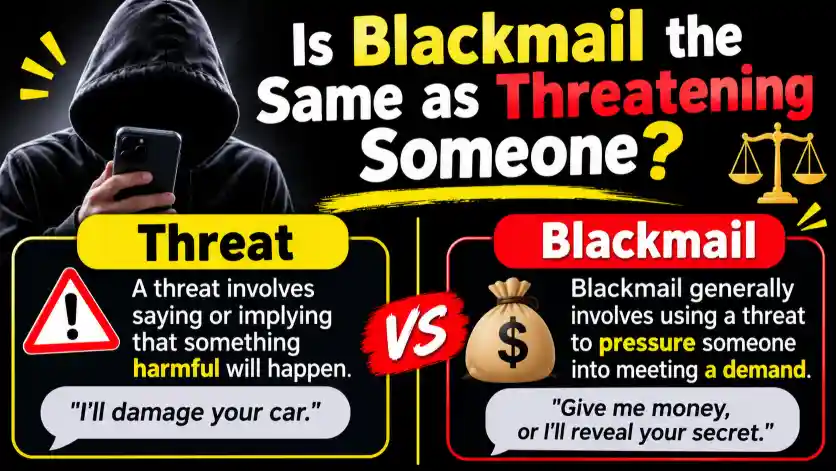
Blackmail and threats are related, but they do not mean exactly the same thing.
A threat involves saying or implying that something harmful will happen. Blackmail generally involves using a threat to pressure someone into meeting a demand, often by threatening to reveal information or expose something private.
For example:
- Threat: “I’ll damage your car.”
- Blackmail: “Give me money, or I’ll reveal your secret.”
The first message threatens harm. The second uses a threat to demand something.
The exact legal definitions vary by location, and some conduct may fall under other offenses as well.
Is Blackmail the Same as Extortion?
Blackmail and extortion overlap in everyday language and in some legal systems, but their definitions can differ.
Blackmail often involves threatening to reveal private information, expose a secret, or damage someone’s reputation unless a demand is met.
Extortion is a broader term in many legal systems for obtaining money, property, services, or another benefit through wrongful threats or coercion.
For example:
- “Pay me, or I’ll reveal your secret” may be described as blackmail.
- “Give me money, or I’ll hurt you” may be described as extortion or another serious offense, depending on the law and circumstances.
The exact legal classification depends on the jurisdiction and the details of the situation.
Is Blackmail Rude or Offensive?
Blackmail is a serious and negative term. It describes threatening behavior rather than ordinary disagreement.
Someone may use the word when describing a frightening experience, reporting abuse, or explaining why a message feels threatening.
However, not every unpleasant conversation is blackmail.
When It May Be Blackmail
- Someone demands money and threatens to reveal private information.
- Someone threatens to publish private photos unless the recipient complies.
- Someone uses a secret to pressure another person into doing something.
- Someone threatens exposure to obtain a benefit or force compliance.
When It May Not Be Blackmail
- A friend says, “I’ll tell your teacher you skipped class,” without demanding anything in return.
- Someone says, “I’m going to report what happened,” because they genuinely intend to report misconduct.
- Two friends jokingly say, “You owe me a treat,” without a serious threat or coercion.
The circumstances matter. A genuine warning or a lawful report is not automatically blackmail, and the legal meaning depends on the relevant facts and local law.
How Should You Reply to a Blackmail Message?
If someone sends a threatening message, your safety comes first. You do not have to negotiate with them or agree to their demands.
If Someone Threatens to Reveal Your Secret
You can respond calmly, if it is safe to do so:
- “Stop threatening me.”
- “I do not consent to you sharing my private information.”
- “I am saving these messages and will report this behavior.”
You do not need to reply at all if responding could make the situation worse.
If Someone Demands Money
Avoid sending money simply because the person threatens you. Payment does not guarantee that the threats will stop.
Instead:
- Save screenshots and relevant messages.
- Keep the account username, profile link, dates, and payment demands.
- Report the account to the relevant platform.
- Contact a trusted person or appropriate authorities for help.
If Someone Threatens to Share Private Photos
Do not send additional images or personal information to satisfy the demand. Preserve evidence and seek help. If intimate images involve a minor, do not download, forward, or redistribute them; contact a trusted adult or appropriate child-protection authority.
You are not responsible for another person’s decision to threaten or exploit you.
What Should You Do If Someone Is Blackmailing You Online?
Online blackmail can be frightening, but there are practical steps you can take.
- Save evidence. Keep screenshots, messages, usernames, profile links, and relevant dates. Avoid altering the evidence.
- Do not send more private content. A blackmailer may use additional material to make further demands.
- Avoid paying if possible. Paying does not guarantee that the person will stop threatening you.
- Report the account. Use the platform’s safety and reporting tools.
- Protect your accounts. Change passwords if necessary, enable two-factor authentication, and review privacy settings.
- Tell someone you trust. A trusted friend, family member, counselor, or other support person can help you decide what to do next.
- Seek appropriate help. Contact local law enforcement or a relevant support organization if you face serious threats, financial demands, stalking, or threats involving intimate images.
If you believe you are in immediate danger, contact local emergency services.
Common Mistakes People Make About Blackmail
1. Thinking Blackmail Only Involves Money
Blackmail can involve money, but a demand may also involve favors, actions, or other benefits.
2. Assuming Every Threat Is Blackmail
A threat can be serious without meeting the definition of blackmail. The nature of the threat and any demand matter.
3. Treating Online Blackmail as a Joke
Threats involving private images, secrets, or personal information can have serious consequences, even when they happen through a social media account.
4. Believing Payment Will End the Problem
There is no guarantee that paying someone will stop the threats. A person may continue demanding money or other favors.
5. Deleting Every Message Immediately
Deleting evidence may make it harder to report what happened. If it is safe, preserve relevant messages before blocking or reporting the account.
Frequently Asked Questions
1. What does blackmail mean in text?
Blackmail means threatening someone to make them meet a demand. The threat may involve revealing private information, sharing personal content, or causing reputational harm.
2. What does blackmail mean on WhatsApp?
On WhatsApp, blackmail may involve threatening to share private messages, photos, videos, or secrets unless someone gives money or agrees to a demand.
3. What does blackmail mean on Instagram?
Instagram blackmail may involve threatening to expose private conversations or personal content through DMs, posts, or stories.
4. What does blackmail mean on Snapchat?
On Snapchat, blackmail can involve threats to share saved snaps, screenshots, or private information unless the recipient complies with a demand.
5. Is blackmail illegal?
Blackmail is illegal in many circumstances, but the exact law and definition vary by country and jurisdiction. If someone is threatening you, preserve evidence and seek appropriate local advice or support.
6. Is blackmail the same as manipulation?
No. Manipulation involves influencing or controlling someone unfairly. Blackmail is a more specific form of coercion that involves using threats to make someone meet a demand.
7. Can someone blackmail you with screenshots?
Yes. Someone may attempt to blackmail a person by threatening to reveal screenshots of private conversations. Save evidence and report the threats rather than complying under pressure.
8. What should I do if someone blackmails me?
Preserve evidence, avoid sending money or additional private content, report the account, and seek help from someone you trust or the appropriate authorities.
9. Can blackmail happen between friends or partners?
Yes. A friend, partner, former partner, acquaintance, or stranger can engage in blackmail. The relationship does not make threatening behavior acceptable.
10. Does blackmail have a short form in texting?
There is no single widely established texting abbreviation for blackmail. People generally write the full word blackmail when discussing this behavior.
Conclusion
Blackmail in text means using threats to pressure someone into doing something or meeting a demand. It may involve money, private messages, personal secrets, photos, videos, or other sensitive information.
The term can appear in WhatsApp messages, Instagram DMs, Snapchat chats, TikTok discussions, and other online conversations. Although context matters when interpreting the word, real threats should always be taken seriously.
If someone is blackmailing you, preserve evidence, protect your private information, report the behavior, and seek help when needed. You do not have to handle the situation alone.
Read More:
- BL Mean in Text: Is It Slang or an Abbreviation?
- 304 Slang Meaning: Why People Use This Number
- Black Heart Mean in Text: Love, Sadness or Sarcasm?

Hi, I’m Sophia Turner, a writer at SlangRise with 7 years of experience researching English slang, internet abbreviations, and modern vocabulary.