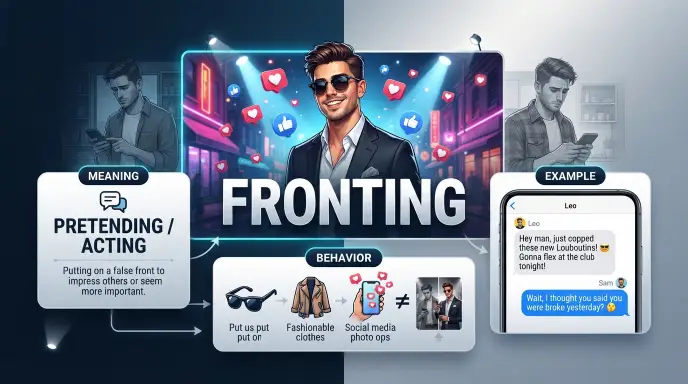
Fronting Slang most commonly means pretending, acting fake, or putting up a false image to impress others as in “stop fronting like you don’t care.”
This term became especially popular through hip-hop culture, often used to call out someone for lying, exaggerating, or acting differently than they truly feel.
In a separate context, particularly in drug culture, “fronting” also means giving someone goods or money on credit, to be paid back later so tone and topic both matter here.
In this guide, you’ll learn both meanings of “fronting,” their origins, and how to tell which one applies based on context.
Quick Answer: What Does Fronting Mean in Slang?
Fronting slang means pretending to be something you are not or hiding the truth to create a certain image. Someone who is fronting may be acting tough, rich, confident, or uninterested when that is not how they really feel.
Example:
“Why are you fronting? I know you like the song.”
Meaning:
“Why are you pretending? I know you like the song.”
What Does Fronting Mean in Slang?
Fronting means putting on a false image or pretending.
A person may front to:
- Look rich
- Look tough
- Look successful
- Look cool
- Hide fear
- Hide feelings
- Impress other people
- Avoid embarrassment
For example:
“He acts like he has a lot of money, but he’s just fronting.”
This means he is pretending to be wealthy.
Another example:
“Don’t front. You were nervous too.”
This means:
“Don’t pretend. You were nervous too.”
What Does “Stop Fronting” Mean?
“Stop fronting” means “stop pretending” or “stop acting fake.”
It is one of the most common ways to use the word.
For example:
“Stop fronting. I know you were excited.”
The speaker believes the other person is hiding their real feelings.
Another example:
“Stop fronting like you don’t care.”
Meaning:
“Stop pretending that you don’t care.”
The phrase can sound playful, serious, or accusing depending on the tone.
Different Meanings of Fronting
Fronting can have several meanings depending on the context.
Pretending or Acting Fake
This is the most common slang meaning.
“She’s fronting like she doesn’t know him.”
Meaning:
She is pretending that she does not know him.
Pretending to Be Wealthy
Someone may front about money or possessions.
“He bought one expensive shirt and started fronting.”
Meaning:
He is trying to look wealthier than he really is.
Pretending to Be Tough
A person may front to hide fear.
“He was scared, but he kept fronting.”
Meaning:
He was pretending to be tough.
Hiding Real Feelings
Fronting can also mean pretending not to care.
“You’re fronting. You know you miss her.”
Meaning:
You are hiding your real feelings.
Is Fronting Positive or Negative?
Fronting usually has a negative meaning.
It suggests that someone is not being genuine.
For example:
“He’s always fronting.”
This often means the speaker thinks the person is fake or trying too hard.
However, friends may also use the word jokingly.
“Stop fronting. I know you love that movie.”
This can be playful rather than seriously negative.
So the tone depends on the relationship and situation.
Where Is Fronting Commonly Used?
Fronting is most common in informal conversations.
You may see or hear it in:
- Casual speech
- Text messages
- Social media
- TikTok
- Rap and hip-hop
- Movies and TV
- Online chats
It is not normally used in formal writing.
Fronting in Hip-Hop and Black American English
Fronting has long been used in Black American English and hip-hop culture to describe putting on a false image or pretending. It later became familiar to a wider audience through music, movies, and popular culture.
The word did not start on TikTok or modern social media. Online platforms helped spread existing slang to new audiences.
Because slang can have cultural roots, it is better to understand the original meaning and use it naturally rather than treating it as a random internet trend.
Fronting Meaning in Text Messages
In texts, fronting usually means pretending.
Example:
Friend 1: “I don’t even like that restaurant.”
Friend 2: “Stop fronting. You were there last week.”
Friend 2 is saying that Friend 1 is not being honest.
Another example:
“Why you fronting like you don’t know me?”
Meaning:
“Why are you pretending that you don’t know me?”
Fronting Meaning on TikTok
On TikTok, fronting may appear in comments or videos about:
- Fake confidence
- Relationships
- Wealth
- Fashion
- Funny situations
- Friends hiding their feelings
Example:
“He keeps fronting for the camera.”
This means he is acting differently to impress people or create a certain image.
The term may also be used in short jokes:
“Me fronting like I don’t care.”
This means the person is pretending not to care.
Fronting Meaning on Instagram
On Instagram, someone may be accused of fronting if they appear to show a false lifestyle.
For example:
“Stop fronting for Instagram.”
This means:
“Stop pretending your life is different from reality just to impress people online.”
The phrase may refer to showing off:
- Money
- Cars
- Clothes
- Success
- Relationships
However, you should not assume that someone is fronting just because they post expensive things online.
Fronting on Snapchat and Discord
On Snapchat, fronting may be used in a playful argument.
“Don’t front. I know you saw my message.”
Meaning:
“Don’t pretend. I know you saw my message.”
On Discord, it may appear during conversations about games, arguments, or friendships.
“He was fronting like he wasn’t mad.”
Meaning:
“He was pretending that he was not angry.”
There is no special Discord-only meaning.
Fronting vs. Flexing
These words are related, but they are not the same.
| Word | Meaning | Tone |
| Fronting | Pretending or creating a false image | Often negative |
| Flexing | Showing off something you have | Can be playful or boastful |
| Faking | Pretending something is real | Negative |
| Capping | Lying or exaggerating | Often negative |
| Front | A false image or fake behavior | Informal |
For example:
“He’s flexing his new car.”
He may really own the car.
But:
“He’s fronting like the car is his.”
He may be pretending that he owns it.
This is an important difference.
Fronting vs. Capping
Front and capping can sometimes overlap, but they have different ideas.
Fronting
Pretending or putting on a false image.
“Stop fronting like you’re not scared.”
Capping
Lying or saying something that is not true.
“He’s capping about how much money he makes.”
A person can front without directly saying a lie. Their actions alone may create a false image.
Why Do People Front?
People may front for many reasons.
To Impress Others
Someone may pretend to have more money or success.
To Hide Insecurity
A person may act confident when they actually feel nervous.
To Look Tough
Someone may hide fear to avoid looking weak.
To Protect Feelings
A person may pretend they do not care about someone.
To Fit In
Some people create a false image because they want acceptance from a group.
These reasons do not always make fronting acceptable, but they help explain why people do it.
Real-Life Examples of Fronting Slang
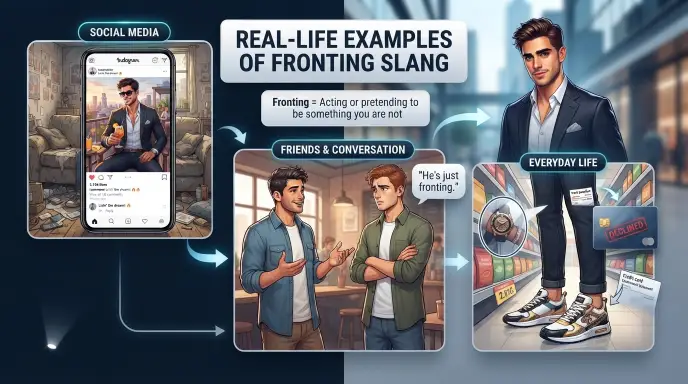
Example 1: Acting Tough
“You don’t have to front. We know you’re scared.”
Meaning: You do not have to pretend to be tough.
Example 2: Pretending Not to Care
“Stop fronting. You know you miss your old friends.”
Meaning: Stop pretending that you do not miss them.
Example 3: Social Media
“He’s fronting for Instagram.”
Meaning: He is creating a false image online.
Example 4: Money
“She’s fronting like she’s rich.”
Meaning: She is pretending to have a lot of money.
Example 5: Friends
“Why are you fronting like you don’t know me?”
Meaning: Why are you pretending not to know me?
Is Fronting Rude?
Fronting can sound rude because it suggests that someone is being fake.
If you say:
“You’re fronting.”
you are accusing the person of pretending.
The phrase can start an argument if used seriously.
However, friends may say:
“Stop fronting!”
as a joke.
Your tone and relationship with the other person matter.
Can You Use Fronting at Work?
It is better to avoid slang like fronting in formal workplace communication.
Instead of saying:
“He’s fronting.”
you could say:
- “He is not being honest.”
- “He is creating a false impression.”
- “He appears to be exaggerating.”
- “He is pretending to be more confident than he feels.”
In casual conversations with coworkers, people may understand fronting, but formal communication should use clearer language.
Can You Use Fronting With Teachers or Parents?
Most adults will understand fronting, but the word is casual.
With a teacher, parent, or another person in a serious situation, pretending is usually clearer.
For example:
Instead of:
“He’s fronting.”
You can say:
“I think he’s pretending.”
When Should You Avoid Using Fronting?
Avoid fronting when the situation requires formal or respectful language.
Do not use it in:
- Formal emails
- Business reports
- School essays
- Legal documents
- Serious professional discussions
You should also avoid using it to accuse someone without being sure.
Saying someone is fronting can sound judgmental because you are claiming that their behavior is not genuine.
Common Misunderstandings About Fronting
Is Fronting a Texting Abbreviation?
No. Fronting is a slang word, not an abbreviation.
Does Fronting Always Mean Lying?
No. Someone can front without directly telling a lie. They may simply act in a false way.
Is Fronting the Same as Flexing?
No. Flexing means showing off, while fronting means pretending or creating a false image.
Is Fronting Always Negative?
Usually, but friends may use it jokingly.
Is Fronting New TikTok Slang?
No. The term has been used for a long time and did not begin on TikTok.
Does Fronting Mean Acting Tough?
Yes. Pretending to be tougher than you really are is one common form of fronting.
Frequently Asked Questions
What does fronting mean in slang?
Fronting means pretending or creating a false image.
What does “stop fronting” mean?
It means stop pretending or stop acting fake.
Is fronting a bad word?
No. It is not a swear word, but it can sound negative because it suggests someone is fake.
What does fronting mean in texting?
In texting, fronting usually means pretending or hiding the truth.
What does fronting mean on TikTok?
It usually refers to pretending, acting fake, or trying to create a false image.
Is fronting the same as lying?
Not exactly. Lying means saying something untrue. Fronting can involve actions or behavior that create a false impression.
Is fronting the same as flexing?
No. Flexing means showing off. Fronting means pretending.
Can I say fronting at work?
It is better to use clear professional words such as pretending, exaggerating, or creating a false impression.
Conclusion
Fronting slang means pretending, acting fake, or creating a false image. A person may front to look rich, tough, confident, cool, or unaffected when that is not how they really feel.
The word is usually negative, but friends may also use “stop fronting” in a playful way. Context and tone matter. In most situations, if someone says you are fronting, they believe you are not being genuine.
You may also like:
- PU Slang: One Abbreviation, Still Three Definitions in 2026
- Nymph Meaning Slang: Why This Word Trended in 2026
- Cooking Slang Meaning: The Difference That Trips Everyone Up in 2026

Hi, I’m Sophia Turner, a writer at SlangRise with 7 years of experience researching English slang, internet abbreviations, and modern vocabulary.