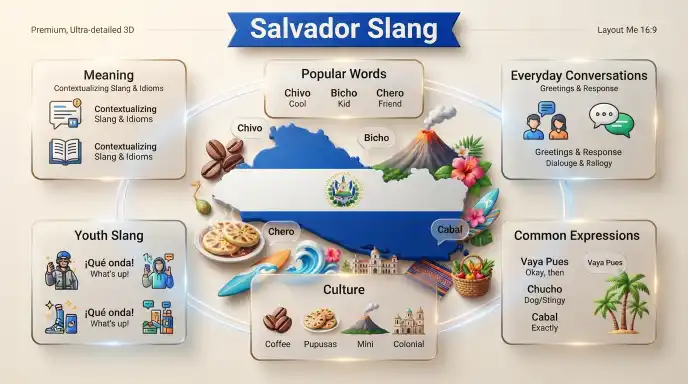
Salvador Slang, known locally as “caliche,” refers to the unique informal words and expressions used in El Salvador, such as “chero” (friend), “arrecho” (awesome), and “chivo” (cool).
This vocabulary blends influences from Indigenous languages and creative Spanish wordplay, giving Salvadoran speech a warm, playful, and distinct personality compared to other Spanish-speaking countries.
Learning this slang helps travelers, language learners, and Spanish speakers better connect with locals and understand the friendly, relaxed tone embedded in everyday Salvadoran conversation.
In this guide, you’ll discover the most popular Salvadoran slang words, their meanings, and how to use them naturally in conversation.
Quick Answer
Salvador slang refers to informal words and phrases commonly used in El Salvador. Popular examples include chero (friend), maje (guy or friend), cipote (child), bicho (kid), and chivo (cool or great).
What Does Salvador Slang Mean?
Salvador slang includes casual expressions that people in El Salvador use instead of standard Spanish words. These terms make conversations sound more natural and reflect the country’s unique culture.
Some of the most common Salvador slang words are:
- Chero – Friend or buddy.
- Maje – Guy, person, or friend. It can also be an insult depending on the tone.
- Chivo – Cool, great, or awesome.
- Bicho – Child or young person.
- Cipote – Boy, girl, or child.
Examples:
- “Mi chero viene conmigo.”
- Meaning: “My friend is coming with me.”
- “Ese lugar está bien chivo.”
- Meaning: “That place is really cool.”
The meaning of these words depends on the conversation and the relationship between the speakers.
Word at a Glance
| Feature | Details |
| Word | Salvador Slang |
| Part of Speech | Noun Phrase |
| Pronunciation | US: /ˈsæl.və.dɔːr slæŋ/ |
| Common Meaning | Informal expressions used in El Salvador |
| Tone | Casual, friendly, and conversational |
| Common Contexts | Daily conversations, texting, music, social media |
| Related Words | Salvadoran Spanish, Central American slang, local expressions |
Salvador Slang Full Form / Definition
Salvador slang does not have a full form because it is not an abbreviation.
Instead, it refers to the collection of informal words and phrases that have developed naturally in El Salvador over many years.
These expressions are influenced by:
- Local traditions.
- Salvadoran Spanish.
- Indigenous languages.
- Youth culture.
- Music and entertainment.
Each generation may introduce new slang while older expressions continue to be used by many families and communities.
What Does Salvador Slang Stand For?
Salvador slang does not stand for a specific phrase or acronym.
Instead, it represents the informal style of speaking that is unique to El Salvador. These expressions help people communicate in a friendly, relaxed, and culturally familiar way.
Is Salvador Slang Rude, Offensive, or Neutral?
Most Salvador slang words are neutral or friendly, but some can become offensive depending on the tone and situation.
For example:
- Chero is almost always friendly.
- Chivo is a positive compliment.
- Maje can mean “friend” among close friends, but it may sound rude if spoken angrily.
Because tone changes the meaning, it is best to understand how native speakers use these words before using them yourself.
Where Is Salvador Slang Commonly Used?
Salvador slang is commonly used in:
- Daily conversations.
- Text messages.
- WhatsApp chats.
- TikTok videos.
- Instagram posts.
- Facebook comments.
- YouTube videos.
- Music and entertainment.
Many Salvadorans living in other countries also use these expressions to stay connected with their culture and community.
Why Do People Use Salvador Slang?
People use Salvador slang because it makes conversations feel more natural and personal.
Common reasons include:
- Showing friendship.
- Expressing local identity.
- Making conversations more relaxed.
- Sharing humor.
- Connecting with Salvadoran culture.
These expressions are an important part of everyday communication and help preserve the country’s unique way of speaking.
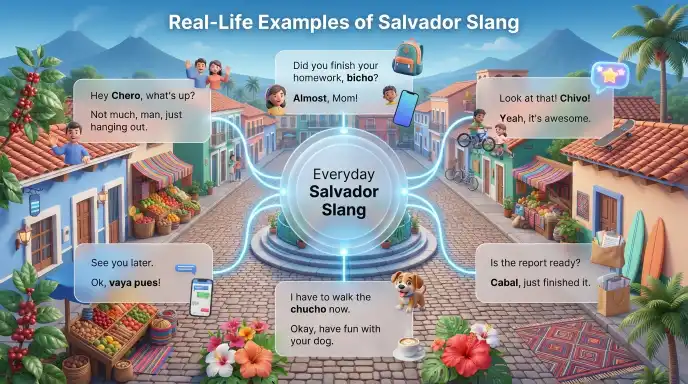
Real-Life Examples of Salvador Slang
Salvador slang changes depending on the speaker, relationship, and situation. Some words are friendly and playful, while others can sound rude if spoken with an angry tone. Learning these examples makes it easier to understand everyday conversations.
Friendly Examples
Friends often use Salvador slang to greet each other or show closeness.
Examples:
- “¡Qué onda, chero!”
- Meaning: “What’s up, friend!”
- “Ese maje siempre me ayuda.”
- Meaning: “That guy always helps me.”
- “Mi chero llegó temprano.”
- Meaning: “My friend arrived early.”
- “Está bien chivo verte otra vez.”
- Meaning: “It’s really great to see you again.”
These examples show how slang creates a warm and relaxed conversation.
Casual Examples
Salvadorans use slang naturally in daily life.
Examples:
- “Ese restaurante está chivo.”
- Meaning: “That restaurant is really good.”
- “El bicho está jugando afuera.”
- Meaning: “The kid is playing outside.”
- “La cipota ya llegó.”
- Meaning: “The girl has already arrived.”
- “Voy a salir con mis cheros.”
- Meaning: “I’m going out with my friends.”
These expressions are common in everyday conversations.
Argumentative Examples
Some Salvador slang words can have a negative meaning when spoken with frustration or anger.
Examples:
- “No seas maje.”
- Meaning: “Don’t be foolish.”
- “Ese maje nunca escucha.”
- Meaning: “That guy never listens.”
- “Deja de molestar, bicho.”
- Meaning: “Stop bothering me, kid.”
The same word may sound friendly in one conversation and disrespectful in another. Tone is very important.
Social Media Examples
Salvador slang is common on social media, especially among younger users.
Examples:
- “Ese video está bien chivo.”
- Meaning: “That video is really cool.”
- “Saludos a todos mis cheros.”
- Meaning: “Greetings to all my friends.”
- “Qué onda, maje?”
- Meaning: “What’s up, dude?”
On platforms like TikTok, Instagram, Facebook, WhatsApp, Reddit, and YouTube, these words help people express their personality and cultural identity.
Origin and Background of Salvador Slang
Salvador slang developed over many generations through daily communication in El Salvador. The country’s history, culture, and regional traditions have shaped the way people speak today.
Many expressions were influenced by:
- Salvadoran Spanish.
- Indigenous languages, especially Nahuat.
- Central American culture.
- Family traditions.
- Youth language and music.
As younger generations created new expressions, older slang words continued to be passed down through families and local communities.
Today, social media has helped Salvadoran slang become more familiar to Spanish speakers around the world.
Comparison With Similar Slang
Some Salvador slang words have meanings similar to slang used in other Spanish-speaking countries, but the words are often unique to El Salvador.
For example:
- Chero is similar to amigo or bro.
- Maje is similar to dude or guy.
- Chivo is similar to cool or awesome.
- Bicho is similar to kid or child.
Even if two countries use the same word, the meaning may not be exactly the same.
Key Differences
| Salvador Slang | Similar Word | Meaning |
| Chero | Amigo | Friend |
| Maje | Dude | Guy or person |
| Chivo | Cool | Great or awesome |
| Bicho | Niño | Child |
| Cipote | Kid | Boy or girl |
Comparison Table
| Slang Term | Meaning | Tone | Example |
| Chero | Friend | Friendly | “Mi chero me llamó.” |
| Maje | Guy or friend | Casual | “Ese maje llegó.” |
| Chivo | Cool or great | Positive | “Está chivo.” |
| Bicho | Child | Neutral | “El bicho juega.” |
| Cipote | Young boy or girl | Casual | “La cipota estudia.” |
When to Avoid Using Salvador Slang
Although Salvador slang is common in everyday life, it is not suitable for every situation.
Avoid using these expressions when:
- Writing formal documents.
- Speaking in business meetings.
- Talking with people who may not know Salvadoran slang.
- Using words like maje without understanding the tone.
Using standard Spanish is usually the better choice in professional or formal communication.
Polite Alternatives for Salvador Slang
If you want to sound more formal, you can replace slang with standard Spanish words.
| Salvador Slang | Standard Spanish |
| Chero | Amigo |
| Maje | Persona / amigo |
| Chivo | Excelente / bueno |
| Bicho | Niño |
| Cipote | Niño / niña |
These alternatives are easier for Spanish speakers from different countries to understand.
Impact of Using Salvador Slang in Communication
Salvador slang helps people express personality, friendship, and cultural identity. It makes conversations feel more natural among Salvadorans.
Benefits include:
- Building stronger friendships.
- Showing cultural pride.
- Making conversations more expressive.
- Preserving local traditions.
However, because many expressions are regional, people from other Spanish-speaking countries may not understand every slang word. Explaining the meaning can help avoid confusion.
Is Salvador Slang Safe for Social Media?
Yes. Salvador slang is generally safe to use on social media when the words are used respectfully and in the right context.
It is commonly seen on:
- TikTok
- YouTube
Examples:
- “Qué chivo ese video.”
- “Saludos, cheros.”
- “Ese maje hizo un buen trabajo.”
Remember that some words, especially maje, can sound friendly or rude depending on the tone and relationship between the speakers.
Frequently Asked Questions About Salvador Slang
1. What is Salvador slang?
Salvador slang refers to informal words and expressions commonly used by people in El Salvador. These terms are part of everyday conversations and reflect Salvadoran culture and identity.
2. What does chero mean in Salvador slang?
Chero means friend, buddy, or close companion. It is one of the most common and friendly slang words in El Salvador.
Example:
- “Mi chero siempre me ayuda.”
- Meaning: “My friend always helps me.”
3. What does maje mean in Salvador slang?
Maje usually means guy, person, or friend. However, the meaning depends on the speaker’s tone. It can sound friendly between friends but may be offensive if said angrily.
4. What does chivo mean in Salvador slang?
Chivo means cool, great, or awesome. People use it to compliment something they like.
Example:
- “Ese lugar está chivo.”
- Meaning: “That place is really cool.”
5. Is Salvador slang the same as Spanish slang?
No. Salvador slang is a regional variety of Spanish slang. While some words are understood in other Spanish-speaking countries, many expressions are unique to El Salvador or have different meanings elsewhere.
6. Why should you learn Salvador slang?
Learning Salvador slang helps you understand everyday conversations, social media posts, music, and local culture. It also makes it easier to communicate naturally with Salvadoran speakers.
Conclusion
Salvador slang is an important part of everyday life in El Salvador. Popular expressions like chero, maje, chivo, bicho, and cipote help people communicate in a friendly, relaxed, and natural way.
Because many Salvador slang words have different meanings depending on the tone and situation, understanding the context is essential. A word that sounds friendly among close friends may have a different meaning in another conversation.
Whether you are learning Spanish, traveling to El Salvador, or simply curious about regional expressions, knowing Salvador slang will help you better understand the language and the culture behind it.
Read More:
- Root Australian Slang: A Word You Should Know Before Traveling
- Sheila Slang: A Term Every Visitor to Australia Hears
- Cigarette Slang: Understanding the Meaning Behind Each Word

Hi, I’m Sophia Turner, a writer at SlangRise with 7 years of experience researching English slang, internet abbreviations, and modern vocabulary.