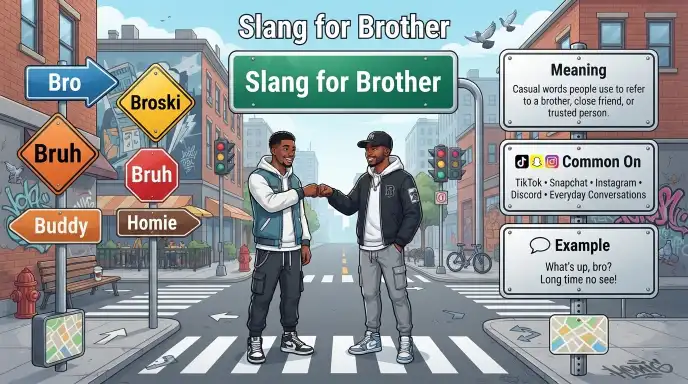
Slang for Brother Informal or casual words (like Bro, Bruh, Homie, Dawg) used to express a close, brotherly bond or friendshi
Brotherhood isn’t always expressed through the word “brother” itself. Over time, casual and creative terms like bro, bruh, homie, and dawg have taken over everyday conversations, texts, and social media.
People use these slang words to show love, loyalty, and closeness with friends who feel like family. They also change their tone based on where people use them, from street conversations to online gaming chats.
If you’re catching up with your real brother or your closest friend, these words add warmth and familiarity to conversations. They turn simple hellos into something more personal.
In this guide, you’ll explore the most popular slang for brother, their meanings, common usage, and the right moments to use each one.
Quick Answer
Slang for brother refers to informal words people use instead of brother. Common examples include bro, bruh, brodie, broski, homie, fam, and blood. These words often express friendship, respect, or a close bond.
Word at a Glance
| Feature | Details | Usage |
| Word | Slang for Brother | Informal expressions used instead of brother |
| Part of Speech | Noun | Refers to a brother, close friend, or trusted person |
| Pronunciation (US & UK) | /ˈbrʌðər/ (BRUH-thər) | Pronunciation of the standard word brother |
| Common Meaning | Casual names used to address or refer to a brother or close friend | Shows friendship, loyalty, respect, or affection |
| Tone | Informal, friendly, and respectful | Common in everyday conversations and online chats |
| Related Words | Bro, Bruh, Brodie, Broski | Popular alternatives depending on the context |
What Does Slang for Brother Mean?
Slang for brother refers to casual words and nicknames that replace the word brother in everyday speech.
These terms are not always used for a biological brother. Many people also use them for close friends, teammates, classmates, or anyone they feel connected to.
For example:
- “Thanks for helping me, bro.”
- “You’re the best, broski!”
- “What’s up, bruh?”
- “I appreciate you, homie.”
Although each word has a slightly different tone, they all express a sense of closeness, friendship, or respect.
Most Common Slang for Brother
Bro
Bro is the most popular slang word for brother. It can refer to a real brother or a close friend.
Example:
“Thanks for having my back, bro.”
Bruh
Bruh is a casual variation of bro. It is often used to express surprise, disbelief, or frustration, but it can also be used to address a friend.
Example:
“Bruh, that was amazing!”
Brodie
Brodie is an affectionate slang term for a close friend or someone you trust. It is common in hip-hop culture and online conversations.
Example:
“Good to see you again, brodie.”
Broski
Broski is a playful version of bro. It is often used between good friends.
Example:
“Let’s grab some food, broski.”
Homie
Homie refers to a trusted friend rather than a biological brother. It emphasizes loyalty and friendship.
Example:
“That’s my homie. We’ve known each other for years.”
Fam
Fam is short for family, but it often refers to close friends who feel like family.
Example:
“How are you doing, fam?”
More Popular Slang Words for Brother
G
G is a slang term that shows respect for a trusted friend or someone you admire. It is commonly used in hip hop culture and casual conversations.
Example:
“Thanks for the help, G.”
Blood
Blood is a slang term used to refer to a close friend or someone you consider like family. In some communities, it expresses loyalty and a strong bond.
Example:
“Good to see you, blood.”
Note: In some contexts, Blood can also refer to a specific street gang. Most everyday conversations, however, use it simply as a friendly term. Always consider the context before using it.
Cuz
Cuz is short for cousin, but many people use it as a friendly way to address close friends or people they know well.
Example:
“What’s good, cuz?”
Dawg
Dawg is a popular slang word for a close friend. It has been widely used in music, sports, and everyday conversations for many years.
Example:
“You’ve always been there for me, dawg.”
My Guy
My guy is a friendly expression used to address someone you trust or appreciate.
Example:
“Great job, my guy!”
My Boy
My boy is commonly used to refer to a close male friend or someone you have known for a long time.
Example:
“That’s my boy right there!”
Twin
Twin is modern slang for a friend who feels like a brother because you are very similar or share a close bond.
Example:
“How’s it going, twin?”
Ace
Ace is sometimes used to describe a trusted friend or dependable companion.
Example:
“You’re my ace, thanks for always helping.”
Where Is Slang for Brother Commonly Used?
These slang words appear in many different situations.
Text Messages
Friends often use words like bro, bruh, or broski in casual chats.
Example:
“Thanks, bro. I really appreciate it.”
TikTok
TikTok creators frequently use these terms in videos, captions, and comments.
Example:
“That’s my bro for life!”
People use slang for brother in captions celebrating friendship or family.
Example:
“Happy birthday to my bro!”
Gaming
Gamers often call teammates bro, homie, or G during matches.
Example:
“Nice play, bro!”
Everyday Conversations
Many of these expressions are part of normal daily speech among friends.
Example:
“See you later, fam.”
Is Slang for Brother Rude, Offensive, or Harmless?
Most slang words for brother are friendly and harmless.
However, some terms depend on the setting and cultural background.
| Slang | Tone | Best Used With |
| Bro | ✅ Friendly | Friends, siblings |
| Bruh | ✅ Casual | Friends |
| Broski | ✅ Playful | Close friends |
| Homie | ✅ Friendly | Trusted friends |
| Fam | ✅ Warm | Friends and family |
| G | ✅ Respectful | Close friends |
| Blood | ⚠️ Context matters | People familiar with the term |
| Dawg | ✅ Casual | Friends |
Real-Life Examples of Slang for Brother
Friends
A: “Thanks for helping me move.”
B: “Anytime, bro.”
School
“Bruh, did you finish the homework?”
Gaming
“Nice shot, homie!”
Social Media
“Happy birthday to my bro! Have an amazing year.”
Family
“My brother has always been my best friend, bro for life.”
Did You Know?
Although bro originally meant a biological brother, today it is often used for close friends, teammates, classmates, and even people you’ve just met. In many English-speaking communities, calling someone bro is simply a friendly way to show respect and connection.
Origin and History of Slang for Brother
People have shortened the word brother to bro for many decades. Over time, new variations such as bruh, brodie, and broski became popular in different communities and online spaces.
Many of these terms grew through African American Vernacular English (AAVE), hip hop culture, sports, and everyday street conversations before spreading to social media.
Today, words like bro, bruh, and fam are commonly seen on TikTok, Instagram, YouTube, Discord, and in text messages around the world.
Why Do People Use Slang for Brother?
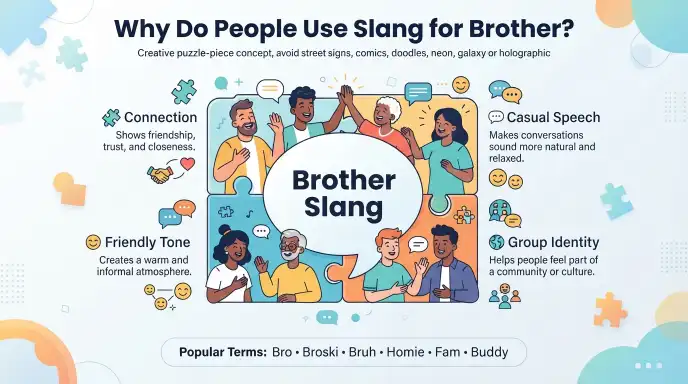
People use slang for brother because it sounds more natural and friendly than the formal word brother.
Common reasons include:
- Showing friendship.
- Expressing loyalty.
- Greeting someone casually.
- Showing appreciation or respect.
- Creating a relaxed and friendly conversation.
These words help people feel more connected in everyday conversations.
Similar Slang and Related Terms
If you’re looking for more slang words similar to brother, here are some common alternatives.
| Slang | Meaning |
| Bro | Brother or close friend |
| Bruh | Casual way to say bro |
| Broski | Playful version of bro |
| Brodie | Trusted friend |
| Homie | Close friend |
| Fam | Someone who feels like family |
| G | Trusted or respected friend |
| Dawg | Loyal friend |
| Cuz | Close friend or cousin |
| Twin | Friend who feels like a brother |
Although these words are similar, each has its own tone and is used in different situations.
Common Misunderstandings About Slang for Brother
It Doesn’t Always Mean a Real Brother
Many people think these words only refer to a biological brother.
In reality, terms like bro, homie, and fam are often used for close friends.
Not Every Slang Word Fits Every Situation
Some words are more casual than others.
For example:
- Bro is widely accepted.
- Bruh often expresses surprise or frustration.
- Blood has cultural meanings and should be used carefully.
- G is more common in hip hop and street culture.
Understanding the context helps you choose the right word.
Slang Changes by Region
Some slang words are more popular in certain countries or communities.
For example:
- Bro is common almost everywhere.
- Bruv is mainly used in the United Kingdom.
- Brodie is especially popular in North America.
- Fam is common in both the UK and North America.
When Should You Avoid Using Slang for Brother?
Although these words are friendly, they are not suitable for every situation.
Avoid using them:
- In business emails.
- During job interviews.
- In academic writing.
- In formal presentations.
- When speaking with someone who prefers formal language.
Instead, use brother, friend, colleague, or the person’s name when a formal tone is needed.
Polite Alternatives to Slang for Brother
If you want to sound more respectful or professional, you can use these alternatives.
| Informal Slang | Polite Alternative |
| Bro | Friend |
| Bruh | Friend |
| Homie | Close friend |
| Fam | Family member |
| Dawg | Friend |
| G | Buddy |
| Blood | Friend |
| Broski | Friend |
Choosing the right word for the situation helps your communication sound natural and respectful.
Frequently Asked Questions
1. What is the most common slang for brother?
The most common slang for brother is bro. It is widely used to refer to a real brother, a close friend, or someone you trust.
2. Is bro short for brother?
Yes. Bro is a shortened form of brother. It is one of the most popular slang words in modern English.
3. What’s the difference between bro and bruh?
Bro is mainly used to address a friend or brother.
Bruh can also address a friend, but it is often used to express surprise, disappointment, or disbelief.
4. Does homie mean brother?
Not exactly. Homie usually means a close friend rather than a biological brother. However, many people use it for someone who feels like family.
5. Is fam another word for brother?
Fam originally means family, but in slang it often refers to close friends or people you care about like family.
6. Is calling someone bro respectful?
Yes. In most casual conversations, calling someone bro is considered friendly and respectful. However, it may not be appropriate in formal situations.
7. Can I use brother slang at work?
It depends on the workplace. Casual offices may accept words like bro, but formal workplaces usually prefer professional language.
8. Which slang word is best for a close friend?
Popular choices include:
- Bro
- Homie
- Broski
- Brodie
- Fam
- G
- Dawg
- Twin
The best choice depends on your relationship and the situation.
9. What is British slang for brother?
One of the most common British slang words for brother is bruv. It is widely used in the UK to refer to a brother or a close friend in casual conversations.
10. What does brodie mean in slang?
Brodie is an affectionate slang term for a close friend or trusted person. It is especially popular in hip hop culture and online conversations.
11. Is broski a real slang word?
Yes. Broski is a playful variation of bro. People often use it with close friends to sound friendly and humorous.
12. Is bro still popular?
Yes. Bro remains one of the most widely used slang words in English. It is common in text messages, gaming, social media, and everyday conversations around the world.
Conclusion
Slang for brother includes many friendly and informal words such as bro, bruh, brodie, broski, homie, fam, G, and dawg. While some of these terms refer to a real brother, many are simply used to show friendship, loyalty, and respect.
The best slang word depends on the situation, your relationship with the other person, and local culture. Understanding the meaning and context of each term will help you use them naturally in conversations, text messages, gaming, and social media.
Discover More:
- Slang for People: The Ultimate List You Need to Know
- Blue Slang Meaning: More Than Just a Color
- Cray Meaning Slang: The Real Meaning Behind This Popular Word
- GOATED Slang Meaning: Popular Use in Sports and Social Media

Hi, I’m Sophia Turner, a writer at SlangRise with 7 years of experience researching English slang, internet abbreviations, and modern vocabulary.