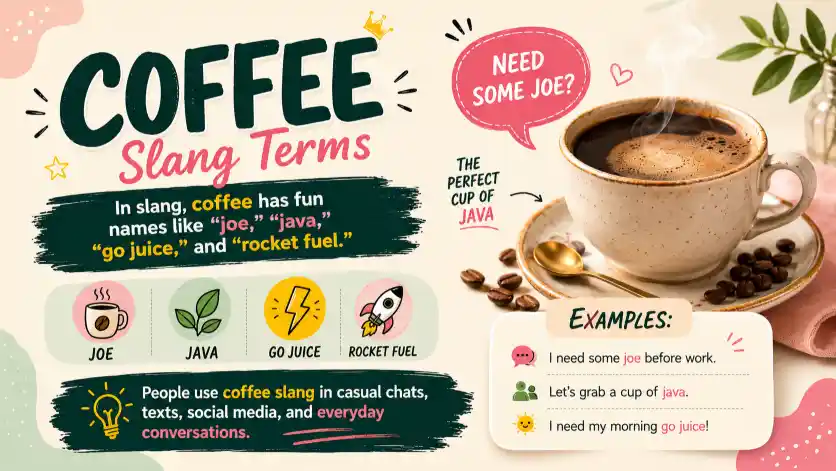
Slang Terms for Coffee refers to the casual nicknames people use instead of “coffee” like “joe,” “java,” and “bean juice” often reflecting history, humor, or regional culture.
“Java” originated from the Indonesian island known for growing coffee, while the origin of “cup of joe” remains uncertain, with theories connecting it to military culture and historical coffee traditions dating back to the 1930s.
Beyond the classics, modern slang has added playful terms like “bean juice” and “brain juice,” showing how coffee culture keeps evolving alongside everyday language.
In this guide, you’ll discover popular slang terms for coffee, their origins, and how they’re commonly used in casual conversation today
Quick Answer
Slang terms for coffee include joe, java, brew, cuppa, mud, rocket fuel, jitter juice, and bean juice. Some are common and friendly, while others are humorous or informal.
Word at a Glance
| Term | Meaning | Tone | Common Use |
| Joe | Coffee | Casual | Everyday speech |
| Java | Coffee | Casual | American English |
| Brew | Coffee | Informal | Everyday speech |
| Cuppa | A cup of coffee | Casual | British English |
| Mud | Strong or poor-quality coffee | Humorous | Informal speech |
| Rocket fuel | Very strong coffee | Humorous | Casual speech |
| Jitter juice | Coffee that gives energy | Playful | Informal speech |
| Bean juice | Coffee | Playful | Social media |
| Go juice | Coffee / energy drink | Casual | Informal speech |
| Cup of joe | A cup of coffee | Casual | American English |
What Are Slang Terms for Coffee?
Coffee slang refers to informal names or playful expressions for coffee.
Some terms have been around for decades, while others are newer internet expressions.
For example:
“I need some joe before work.”
Here, joe simply means coffee.
Another example:
“This rocket fuel is strong.”
Here, rocket fuel humorously describes very strong coffee.
1. Joe
Joe is one of the most common informal names for coffee in American English.
Example:
“I need a cup of joe.”
It simply means:
“I need a cup of coffee.”
The phrase cup of joe is especially common.
2. Java
Java is another well-known informal word for coffee.
Example:
“I need some java this morning.”
The term has been used in American English for a long time.
It is casual but widely recognizable.
3. Brew
Brew can refer to coffee that has been prepared by brewing.
Example:
“Want another cup of brew?”
You may also hear:
“I just made a fresh brew.”
The word is informal and common in everyday conversations.
4. Cuppa
Cuppa is short for “cup of.”
In British English, it commonly refers to a cup of tea, but depending on context it can also refer to coffee.
Example:
“Fancy a cuppa?”
The exact drink depends on the situation.
5. Mud
Mud is a humorous slang term for coffee, especially coffee that is very dark, thick, or not very good.
Example:
“I need a cup of mud to wake up.”
It is usually playful rather than a literal description.
6. Rocket Fuel
Rocket fuel is a humorous term for very strong coffee.
Example:
“This coffee is basically rocket fuel.”
People use the expression because strong coffee can make them feel highly energized.
7. Jitter Juice
Jitter juice is a playful term for coffee that gives someone a strong energy boost.
Example:
“I need my jitter juice before I start working.”
The word jitter refers to the shaky or restless feeling that too much caffeine can sometimes cause.
8. Bean Juice
Bean juice is a playful internet-style expression for coffee.
Example:
“Time for some bean juice.”
It comes from the fact that coffee is made from roasted coffee beans.
The expression is informal and often used humorously.
9. Go Juice
Go juice is an informal expression for a drink that gives someone energy. Coffee is one common example.
Example:
“I can’t function without my morning go juice.”
It emphasizes the energy people associate with caffeine.
10. Cup of Joe
Cup of joe simply means a cup of coffee.
Example:
“Let’s grab a cup of joe.”
It is one of the best-known coffee expressions in American English.
Are Coffee Slang Terms the Same Everywhere?
No.
Coffee slang varies by country, region, age group, and social setting.
For example:
- Joe is strongly associated with American English.
- Cuppa is strongly associated with British English.
- Java is widely recognized in American English.
- Bean juice sounds more playful and modern.
- Rocket fuel is usually humorous rather than a fixed regional term.
Some expressions are also used for other caffeinated drinks, so context matters.
Coffee Slang vs. Coffee Names
Not every informal coffee word is technically slang.
For example, java and joe are established informal names for coffee. Rocket fuel and bean juice are more playful descriptions.
This difference is useful when writing about coffee language because not every nickname has the same level of slang usage.
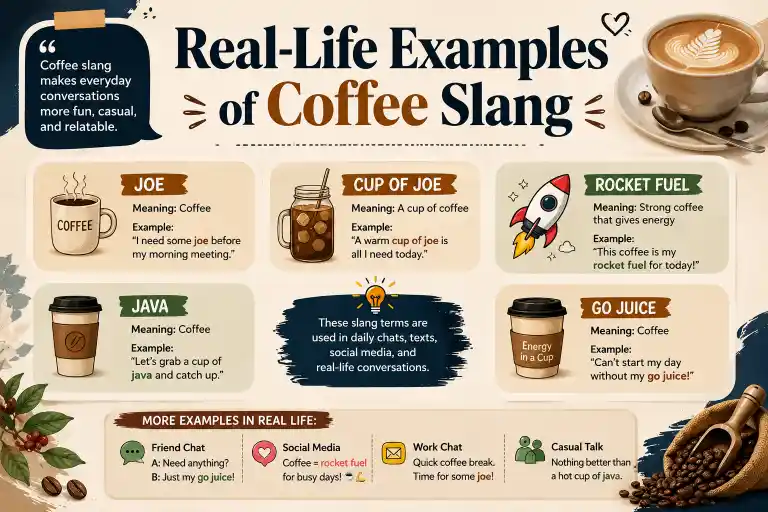
Real-Life Examples of Coffee Slang
People use coffee slang in casual conversations, texts, social media posts, and jokes. The meaning is usually easy to understand from context.
Everyday Examples
- “I need a cup of joe before work.”
- “Let’s grab some java.”
- “I just made a fresh brew.”
- “I need my morning go juice.”
- “Time for some bean juice.”
- “This coffee is pure rocket fuel.”
These expressions give ordinary conversations a more relaxed or playful tone.
Coffee Slang in Texting
Coffee slang is common in messages between friends and coworkers.
Example 1
“You getting coffee?”
“Absolutely. I need my joe.”
Example 2
“How are you awake this early?”
“I have had two cups of java already.”
Example 3
“Want to grab a cuppa?”
“Sure!”
In these examples, the slang makes the conversation sound casual.
Coffee Slang on Social Media
People often use playful coffee terms in captions and comments.
Examples include:
- “Morning fuel ☕”
- “Need my bean juice.”
- “Powered by java.”
- “Coffee first, everything else later.”
- “This cup is straight-up rocket fuel.”
- “Give me the jitter juice.”
These phrases are especially common in memes and casual posts about work, studying, and early mornings.
Coffee Slang for Strong Coffee
Some expressions specifically describe very strong coffee.
Rocket Fuel
“This coffee is rocket fuel!”
This means the coffee tastes very strong or seems extremely energizing.
Jet Fuel
Jet fuel is another humorous expression for extremely strong coffee.
Example:
“I need some jet fuel before my morning meeting.”
Liquid Energy
Liquid energy is a playful description of coffee as a source of energy.
Example:
“This liquid energy is keeping me awake.”
Coffee Slang for Morning Coffee
People often create playful names for their first coffee of the day.
Common examples include:
- Morning fuel
- Wake-up juice
- Go juice
- Liquid energy
- Morning brew
- Cup of joe
Example:
“I can’t start my day without my morning brew.”
These terms focus more on coffee’s role in helping someone feel awake than on the drink itself.
Coffee Slang for Caffeine
Some slang expressions focus on caffeine rather than coffee specifically.
Caffeine Fix
A caffeine fix means getting the caffeine someone wants or feels they need.
“I need my caffeine fix.”
Jitter Juice
Jitter juice is a humorous name for coffee or another caffeinated drink.
“Where’s my jitter juice?”
Liquid Motivation
Liquid motivation can humorously describe coffee that helps someone get started.
“I need some liquid motivation before I study.”
Coffee Slang Used by Students
Students often use playful coffee expressions when talking about studying or staying awake.
Examples:
- “I need some study fuel.”
- “Time for my caffeine fix.”
- “Coffee is keeping me alive.”
- “I need a cup of joe before this exam.”
- “Powered by java today.”
These expressions are informal and often appear in student memes and group chats.
Coffee Slang Used at Work
Coworkers may also use coffee slang casually.
Examples:
“Anyone want a cup of joe?”
“I’m heading downstairs for some java.”
“I need some morning fuel before this meeting.”
“This brew is exactly what I needed.”
These expressions work well in casual workplace conversations but may not fit formal business writing.
Popular Coffee Nicknames Compared
| Slang Term | Meaning | Tone |
| Joe | Coffee | Casual |
| Java | Coffee | Casual |
| Brew | Brewed coffee | Informal |
| Cuppa | Cup of a drink, often tea | British / casual |
| Bean juice | Coffee | Playful |
| Go juice | Energy-giving drink | Playful |
| Jitter juice | Caffeinated drink | Humorous |
| Rocket fuel | Very strong coffee | Humorous |
| Jet fuel | Very strong coffee | Humorous |
| Morning fuel | Morning coffee | Playful |
| Wake-up juice | Coffee / caffeine | Playful |
| Liquid energy | Coffee or caffeine | Humorous |
| Caffeine fix | Needed caffeine | Casual |
| Cup of joe | Coffee | Casual |
Coffee Slang in British vs. American English
Coffee slang can differ between American and British English.
American English
Common terms include:
- Joe
- Cup of joe
- Java
- Brew
- Rocket fuel
Example:
“Let’s grab a cup of joe.”
British English
You may hear:
- Cuppa
- Brew
- Coffee
- A coffee
Example:
“Fancy a cuppa?”
However, cuppa most often means tea in Britain. Context determines if the speaker means tea or coffee.
Origin of Common Coffee Slang
Joe
The origin of joe is uncertain. Several theories have been suggested, but there is no single explanation that is universally accepted.
Java
Java became associated with coffee because Java, an Indonesian island, has long been known for coffee production.
Brew
Brew comes from the process of preparing a drink by brewing it.
Cuppa
Cuppa is a shortened form of “cup of” and became common in British informal speech.
Bean Juice
This is a much more direct modern joke. Coffee comes from coffee beans, so people humorously call it bean juice.
Funny Coffee Slang
Some coffee expressions are mainly used for humor.
Examples:
- Bean juice
- Jitter juice
- Rocket fuel
- Jet fuel
- Wake-up juice
- Liquid motivation
- Liquid energy
- Morning fuel
These expressions are not official names for coffee. They are playful ways to describe it.
When to Use Coffee Slang
Coffee slang works well in:
- Text messages.
- Social media captions.
- Memes.
- Casual conversations.
- Friendly workplace chats.
- Conversations with friends.
- Informal blogs.
For example:
“Powered by coffee and good vibes.”
This sounds natural in a casual post.
When to Avoid Coffee Slang
Avoid slang in:
- Formal reports.
- Academic papers.
- Business proposals.
- Professional documents.
- Official emails.
Instead of:
“I need some rocket fuel.”
A formal version would simply say:
“I need some strong coffee.”
This is clearer and more appropriate for professional writing.
Frequently Asked Questions About Coffee Slang
1. What are some common slang terms for coffee?
Some popular coffee slang terms include joe, java, brew, cuppa, mud, bean juice, go juice, jitter juice, rocket fuel, and cup of joe.
2. What does “joe” mean in slang?
Joe is an informal word for coffee.
Example:
“I need a cup of joe.”
This simply means:
“I need a cup of coffee.”
3. What does “java” mean in slang?
Java is another informal word for coffee.
Example:
“I’m going to grab some java.”
It is especially familiar in American English.
4. What does “brew” mean when talking about coffee?
Brew can refer to brewed coffee or coffee in general.
Example:
“Want another brew?”
The word is casual and can also refer to other brewed drinks depending on context.
5. What does “cuppa” mean?
Cuppa is an informal British expression meaning “cup of.”
It often means tea in British English, but it can refer to coffee when the context makes that clear.
Example:
“Fancy a cuppa?”
6. What does “bean juice” mean?
Bean juice is a playful slang term for coffee. It comes from the fact that coffee is made from roasted coffee beans.
Example:
“I need my bean juice this morning.”
7. What does “rocket fuel” mean in coffee slang?
Rocket fuel is a humorous way to describe very strong coffee.
Example:
“This coffee tastes like rocket fuel.”
It suggests that the coffee feels extremely powerful or energizing.
8. What does “jitter juice” mean?
Jitter juice is a playful term for coffee or another caffeinated drink.
The word “jitter” refers to the shaky or restless feeling that too much caffeine can cause.
9. What does “go juice” mean?
Go juice is an informal expression for a drink that gives someone energy. Coffee is a common example.
Example:
“I need my morning go juice.”
10. What does “mud” mean in coffee slang?
Mud can humorously describe dark, thick, strong, or poor-quality coffee.
Example:
“This office coffee is basically mud.”
11. What is a “cup of joe”?
A cup of joe simply means a cup of coffee.
Example:
“Let’s stop for a cup of joe.”
It is one of the most recognizable informal coffee expressions in American English.
12. What does “caffeine fix” mean?
A caffeine fix means getting the caffeine someone wants or feels they need.
Example:
“I need my caffeine fix before class.”
It can refer to coffee, tea, energy drinks, or other caffeinated products.
13. Is “java” the same as “joe”?
Yes, both can mean coffee, but they have different origins and histories.
- Joe → informal American term for coffee.
- Java → informal term connected to Java, an Indonesian island known for coffee production.
14. Is coffee slang the same in the US and UK?
No. Some expressions are more common in one region than another.
Joe and java are strongly associated with American English, while cuppa is strongly associated with British English.
However, many coffee terms are understood across English-speaking countries.
15. Are coffee slang terms offensive?
Generally, no. Most coffee slang is harmless and playful.
Terms such as joe, java, brew, bean juice, and rocket fuel are normally used casually.
Common Mistakes With Coffee Slang
Mistake 1: Assuming “Cuppa” Always Means Coffee
In British English, cuppa most often refers to tea.
The surrounding conversation tells you what drink the speaker means.
Mistake 2: Thinking “Rocket Fuel” Is Real Coffee
Rocket fuel is usually a humorous description of very strong coffee. It is not normally the actual name of a coffee drink.
Mistake 3: Using Slang in Formal Writing
Terms such as bean juice and jitter juice are playful. They may not fit academic or professional writing.
Mistake 4: Assuming Every Nickname Is Regional Slang
Some coffee expressions are widely used, while others are jokes created by individuals or online communities.
Coffee Slang by Tone
| Tone | Examples |
| Common / Casual | Joe, java, brew |
| British / Casual | Cuppa |
| Playful | Bean juice, go juice |
| Humorous | Jitter juice, rocket fuel |
| Descriptive | Mud, caffeine fix |
| Neutral | Coffee, cup of coffee |
Is Coffee Slang Popular on Social Media?
Yes. Coffee-related slang works especially well in memes, captions, comments, and casual posts.
Examples:
“Powered by bean juice ☕”
“Morning fuel activated.”
“I need my daily dose of java.”
“This cup is pure rocket fuel.”
These phrases make coffee posts sound more relaxed and humorous.
Why Do People Use Coffee Slang?
People use coffee slang because it makes ordinary conversations more fun, personal, and expressive.
Instead of saying:
“I need coffee.”
Someone might say:
“I need my morning fuel.”
Both sentences communicate the same basic idea, but the second one has a more playful tone.
Coffee slang also reflects how strongly coffee is connected with morning routines, work, studying, socializing, and staying alert.
Conclusion
Slang terms for coffee include joe, java, brew, cuppa, mud, bean juice, go juice, jitter juice, rocket fuel, and cup of joe. Some terms are common informal names, while others are humorous expressions.
Joe and java are well-known coffee nicknames. Cuppa is strongly associated with British English, while bean juice, jitter juice, and rocket fuel are more playful ways to talk about coffee or its effects.
Most coffee slang is harmless and works best in casual conversations, texting, social media, and memes. For formal or professional writing, simply using coffee is usually clearer.
Read More:
- Slang for Brain: Words That Mean More Than Intelligence
- Crank Drug Slang: A Clear Guide to This Drug Term
- TIL Slang: The Story Behind Every “Today I Learned” Post

Hi, I’m Sophia Turner, a writer at SlangRise with 7 years of experience researching English slang, internet abbreviations, and modern vocabulary.