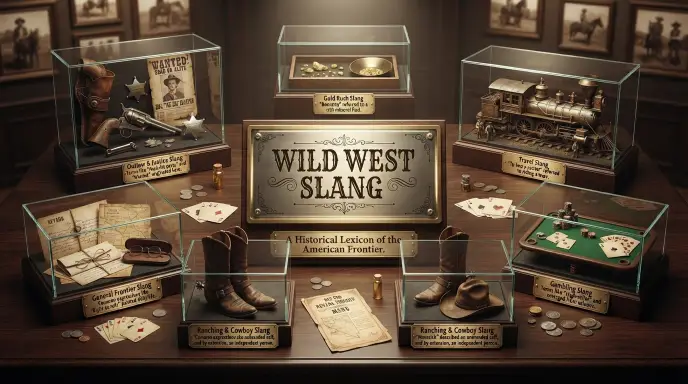
Wild West Slang refers to the colorful, colloquial expressions used during the American frontier era words like “varmint,” “reckon,” and “howdy” often heard among cowboys, outlaws, and settlers.
This vocabulary emerged from a mix of frontier life, ranching culture, and regional dialects, capturing the rugged and independent spirit of the American West.
Many of these terms, like “howdy” and “partner,” have crossed into modern English, while others like “hornswoggle” and “tenderfoot” remain uniquely tied to Old West storytelling.
In this guide, you’ll discover popular Wild West slang words, their meanings, and how they bring the spirit of the frontier to life.
Quick Answer
Wild West slang is a collection of informal words and expressions that people used in the American frontier during the 19th century. These terms often described people, places, animals, jobs, and everyday situations in the Old West.
Wild West Slang at a Glance
| Feature | Details |
| Topic | Wild West Slang |
| Meaning | Informal words used in the American Old West |
| Time Period | Mid-to-late 1800s |
| Common Users | Cowboys, sheriffs, miners, gamblers, outlaws |
| Tone | Casual, Colorful |
| Still Used Today? | Some expressions are still recognized |
| Common In | Western movies, books, TV shows, history |
What Is Wild West Slang?
Wild West slang includes the everyday language people used during the American frontier era.
Life in the Old West was different from modern life. As a result, people created unique expressions for ranching, mining, travel, gambling, and law enforcement.
Many of these words reflected the challenges of frontier life, while others added humor to everyday conversations.
Common Wild West Slang Words
Here are some well-known Wild West slang terms and their meanings.
| Slang | Meaning | Still Used? |
|---|---|---|
| Tenderfoot | Inexperienced newcomer | Rare |
| Buckaroo | Cowboy | Sometimes |
| Hightail | Leave quickly | Yes |
| Pard | Friend | Rare |
| Hornswoggle | Trick someone | Rare |
Although some of these words are uncommon today, they remain famous in Western stories.
Where Was Wild West Slang Commonly Used?
Wild West slang was part of everyday life across the American frontier.
Ranches
Cowboys used slang while working with cattle and horses.
Mining Camps
Miners created expressions related to gold, silver, and hard work.
Saloons
Gamblers, travelers, and locals used slang during conversations and card games.
Frontier Towns
Sheriffs, merchants, and townspeople spoke casually using local expressions.
Western Stories
Today, many authors and filmmakers use Wild West slang to make characters sound authentic.
Is Wild West Slang Offensive?
Most Wild West slang is harmless.
However, some historical expressions reflected the attitudes and language of the 1800s. A few older terms may now be considered disrespectful or outdated.
If you are writing or speaking today, it is best to use only expressions that are widely recognized and respectful.
Real-Life Examples
Cowboy Conversation
1: “Morning, pard.”
2: “Ready to ride?”
Saloon Scene
“The gambler hightailed it out of town after the dust-up.”
Ranch Work
“That tenderfoot is learning how to rope cattle.”
Frontier Story
“The sheriff carried his shootin’ iron wherever he went.”
Everyday Conversation
“Let’s finish this job lickety-split.”
Origin and History of Wild West Slang
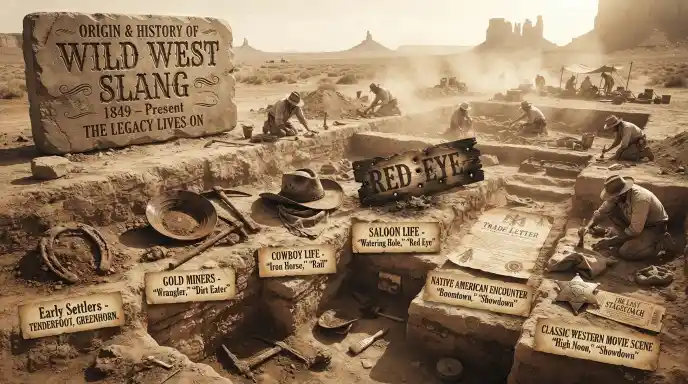
it developed during the American frontier era, especially between the 1840s and the 1890s. As settlers moved west, people from different regions and cultures brought their own ways of speaking.
Cowboys, ranchers, miners, lawmen, gamblers, and stagecoach drivers created new words to describe their work and daily life. Some expressions came from Spanish, while others grew out of frontier life and local traditions.
Many Wild West words came from Spanish because cowboys in the Southwest worked closely with Mexican vaqueros. Others developed in mining camps, cattle ranches, and frontier towns.
Although many of these terms are no longer used in everyday conversation, they remain popular in Western novels, movies, television shows, and historical reenactments.
Popular Wild West Expressions
Many Wild West sayings are still recognized today.
| Expression | Meaning |
| Ride shotgun | Sit beside the driver (originally to guard a stagecoach) |
| Hold your horses | Be patient |
| High noon | Midday, often linked with a showdown |
| Circle the wagons | Work together for protection |
| Bite the dust | Fall down or die |
| Draw | Pull out a weapon quickly |
| Rustler | A person who steals livestock |
| Snake oil salesman | Someone who sells fake or worthless products |
Some of these expressions are still used in modern English, even though their original meanings came from the Old West.
When Should You Avoid Using Wild West Slang?
it can be fun, but it is not suitable for every situation.
Avoid using it when:
- You are writing a business email.
- You are giving a formal presentation.
- You are completing academic writing.
- Your audience may not understand historical slang.
- The expression sounds outdated or confusing.
In professional settings, modern English is usually the better choice.
Modern Alternatives
If Wild West slang feels too old-fashioned, these modern words may work better.
| Wild West Slang | Modern Alternative |
| Pard | Friend |
| Tenderfoot | Beginner |
| Greenhorn | Newcomer |
| Hightail | Leave quickly |
| Dust-up | Argument |
| Shootin’ iron | Gun |
| Buckaroo | Cowboy |
These alternatives are easier for most readers to understand.
Why Do People Still Use it?
Many people enjoy this slang because it adds personality to conversations.
To Create a Western Feel
Writers and filmmakers use these expressions to make stories sound authentic.
To Add Humor
Classic frontier phrases often make conversations more entertaining.
To Celebrate History
Many people enjoy learning how people spoke during the American frontier era.
To Understand Western Movies
Knowing these terms makes it easier to follow classic Western films and books.
Common Misunderstandings
Some ideas about Wild West slang are not completely accurate.
| Myth | Fact |
| Every cowboy used the same slang. | ❌ No. Language varied by region, job, and community. |
| Wild West slang is still common today. | ❌ Most expressions are now mainly used in movies, books, or historical discussions. |
| Every Western movie uses authentic slang. | ❌ Many films mix historical terms with modern language. |
| Wild West slang only came from cowboys. | ❌ Miners, lawmen, settlers, gamblers, and others also helped shape it. |
| All Wild West slang is outdated. | ❌ Some phrases, such as “hold your horses” and “ride shotgun,” are still widely used today. |
Frequently Asked Questions
1. What is Wild West slang?
It refers to the informal words and expressions used by people living in the American frontier during the 19th century.
2. Who used Wild West slang?
Cowboys, sheriffs, miners, ranchers, gamblers, settlers, and outlaws all used wild west slang in everyday life.
3. Is Wild West still used today?
Some expressions are still common, but many are now mainly found in Western movies, books, and historical discussions.
4. What is a “tenderfoot”?
A tenderfoot is an inexperienced beginner who is new to a job, place, or activity.
5. What does “pard” mean?
Pard is a shortened form of partner and means friend, companion, or trusted partner.
6. Is Wild West slang appropriate for everyday conversations?
Some expressions, like “hold your horses,” are still easy to understand. Others may sound old-fashioned, so they work best in historical or Western-themed conversations.
Conclusion
Wild West slang offers a fascinating look at everyday life on the American frontier. These colorful words helped cowboys, miners, lawmen, and settlers communicate during the 19th century. While many expressions have faded over time, others continue to appear in modern English, Western movies, and popular culture.
Learning Wild West slang not only helps you understand classic Western stories but also shows how English has changed over the years.
Related Articles:
- Boul Meaning Slang: Bull, Buddy, or Something Else?
- Silent Generation Slang: Still Charming After All These Years
- Squid Slang Meaning: Everything Explained in One Guide

Hi, I’m Olivia Carter. I enjoy researching English slang, online expressions, and everyday vocabulary. I write clear, beginner-friendly guides with simple definitions and practical examples to make modern English easier to understand.