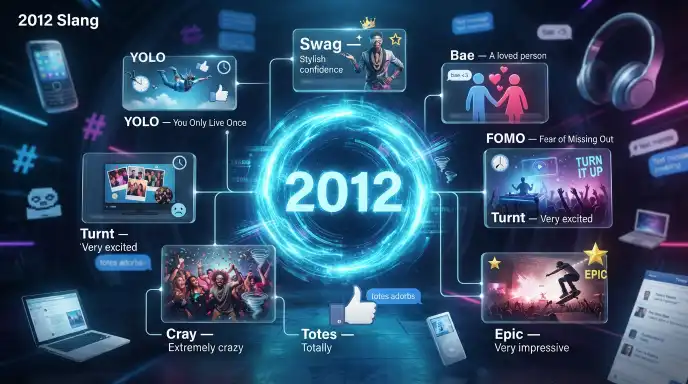
2012 gave us slang that spread through text messages, social media, and school hallways almost overnight words like “yolo,” “swag,” and “bae” that defined a very specific cultural moment.
“Yolo” (You Only Live Once) exploded after Drake’s 2011 song “The Motto,” while “bae” gained traction that year thanks to a viral tweet, later becoming one of the decade’s most recognizable terms of endearment.
Urban Dictionary founder Aaron Peckham noted that of the year’s 100 most-searched terms, roughly 20 were newly popular in 2012 alone including quirky additions like “derp” and “romnesia.”
In this guide, you’ll revisit the slang words that defined 2012, where they came from, and which ones (if any) deserve a comeback.
Quick Answer: What Was 2012 Slang?
2012 slang was a mix of texting language, social-media phrases, youth slang, and meme expressions. Popular examples included YOLO, swag, bae, FOMO, cray, derp, and turnt. Facebook, Twitter, Tumblr, YouTube, music, and texting helped spread these expressions quickly.
Some of these terms are still used today, while others now sound dated or strongly associated with early-2010s internet culture.
What Slang Was Popular in 2012?
The slang of 2012 reflected a major shift in communication.
People were spending more time:
- Texting on smartphones
- Posting on Facebook
- Tweeting
- Using Tumblr
- Watching YouTube
- Sharing memes
- Listening to hip-hop and pop music
- Using abbreviations in chats
This created a fast-moving slang culture.
Here are some of the most recognizable examples.
1. YOLO
YOLO stands for “You Only Live Once.”
People used it to justify doing something exciting, risky, or unusual.
Example:
“I’m going skydiving tomorrow. YOLO!”
The phrase became strongly associated with early-2010s youth culture.
Although the idea existed before 2012, YOLO became especially mainstream around this period, helped by music and social media.
Today, it can sound deliberately nostalgic or humorous.
2. Swag
Swag was one of the biggest slang words of the early 2010s.
It referred to:
- Style
- Confidence
- Fashion
- Coolness
Example:
“That jacket has serious swag.”
People also used swag in jokes, memes, songs, and social-media posts.
The word itself is much older than 2012, but its modern youth-slang use became extremely popular during this era.
3. Bae
Bae is a slang term for a romantic partner or someone you really like.
It became highly visible online during the early 2010s.
Example:
“Going out with bae tonight.”
It could mean:
“Going out with my boyfriend/girlfriend/romantic partner tonight.”
People also used bae jokingly for favorite foods, celebrities, pets, or objects.
“Pizza is bae.”
This means the speaker really loves pizza.
4. FOMO
FOMO means “fear of missing out.”
It describes the feeling that other people are having fun or experiencing something while you are not there.
Example:
“Everyone went to the party without me. Major FOMO.”
Social media helped make the feeling especially easy to describe because people could constantly see what others were doing.
5. Cray
Cray is a shortened form of wild,.
Example:
“That party was cray!”
Meaning:
“That party was wild,!”
The term was common in casual speech and online posts during the early 2010s.
Today, it can sound very dated and is often used to imitate or joke about that era.
6. Derp
Derp became popular through internet memes.
It could describe:
- A silly mistake
- A foolish moment
- A goofy person
- An intentionally foolish expression
Example:
“I forgot my keys again. Derp.”
It was also used as a reaction to something obviously silly.
The term became closely connected with early meme culture.
7. Turnt
Turnt is slang for being highly excited, energetic, or partying hard.
Example:
“The party is about to get turnt.”
Depending on context, it can mean the event is about to become very energetic or wild.
The term was strongly connected to hip-hop and party culture and became more visible in mainstream youth slang during the early 2010s.
8. YOLO Swag
The combination “YOLO swag” became part of the exaggerated humor of the era.
It mixed two popular expressions:
- YOLO
- Swag
People often used combinations like this jokingly.
Example:
“New shoes. YOLO swag.”
Today, this phrase is mostly useful as a snapshot of early-2010s internet humor rather than normal modern slang.
9. Epic
Epic was commonly used online to mean amazing, impressive, or memorable.
Example:
“That video was epic.”
The word itself is much older, but online culture expanded its casual use.
It could describe anything from a great gaming moment to a funny picture.
10. Totes
Totes is a shortened form of totally.
Example:
“Totes agree.”
Meaning:
“I totally agree.”
It appeared often in informal internet and texting culture.
Like cray, it now sounds strongly associated with a particular period of online slang.
11. Obvi
Obvi is short for obviously.
Example:
“Obvi I’m coming.”
Meaning:
“Obviously, I’m coming.”
It fits the early smartphone and texting era because people often shortened longer words for casual messages.
12. JK
JK means “just kidding.”
People used it in texts, comments, and social media after making a joke.
Example:
“I’m never talking to you again. JK 😂”
The phrase is older than 2012, but it was still very common in texting during the period.
13. TBH
TBH means “to be honest.”
Example:
“TBH, I don’t like that song.”
It was common on social media and in text conversations.
The abbreviation is still understood today.
14. IDC
IDC means “I don’t care.”
Example:
“IDC what movie we watch.”
This was common texting shorthand.
Its tone can sometimes sound blunt, so context matters.
15. IRL
IRL means “in real life.”
Internet users used it to distinguish online activity from offline life.
Example:
“We’re friends online and IRL.”
Meaning:
“We’re friends online and in real life.”
The abbreviation remains common in internet conversations.
16. DM
DM means “direct message.”
A DM is a private message sent through a social platform.
Example:
“DM me the details.”
The abbreviation became especially common as social media messaging grew.
It remains widely used today.
17. Troll
A troll is someone who deliberately posts provocative or annoying content online to get a reaction.
Example:
“Don’t respond to him. He’s just trolling.”
The term existed long before 2012, but online trolling became a major part of internet culture during this period.
18. Hashtag
The hashtag symbol # became an important part of social-media language.
Twitter helped popularize hashtags as a way to organize conversations around topics.
Example:
“#YOLO”
or
“#FridayNight”
By 2012, hashtags were a normal part of online communication.
19. Noob
Noob means a new or inexperienced person, especially in gaming or online communities.
Example:
“I’m still a noob at this game.”
It can be neutral, playful, or insulting depending on tone.
The term was already established before 2012 but remained popular in gaming and online communities.
20. Hater
A hater is someone who regularly criticizes or dislikes another person, often online.
Example:
“Ignore the haters.”
This became a common phrase in social media culture.
People used it when responding to negative comments or criticism.
2012 Slang vs. Modern Slang
Some 2012 slang still feels natural today. Other words immediately make people think of the early 2010s.
| 2012 slang | Meaning | Today |
| YOLO | You only live once | Often nostalgic/joking |
| Swag | Style or coolness | Dated in this sense |
| Bae | Romantic partner | Still understood |
| FOMO | Fear of missing out | Still common |
| TBH | To be honest | Still used |
| DM | Direct message | Still common |
| IRL | In real life | Still common |
| Cray | wild | Mostly dated |
| Totes | Totally | Dated |
| Derp | Silly mistake | Mostly meme/nostalgic |
| Turnt | Very excited/partying | Still recognized |
This shows that slang does not disappear all at once. Some terms survive, while others become markers of a specific era.
Why Was 2012 Slang So Popular?
The early 2010s were an important period for internet culture.
Facebook was a major social network. Twitter was rapidly growing. Tumblr had a strong influence on youth culture, while YouTube was becoming a major source of entertainment.
Smartphones also made texting and social media easier to access throughout the day.
Because of this, a word could spread from:
music → memes → Twitter → Tumblr → texting → everyday speech
That helped expressions like YOLO, swag, bae, and FOMO move into mainstream conversation.
Did 2012 Slang Come From the Internet?
Not all of it.
This is an important distinction.
Some popular 2012 expressions came from:
- African American English
- Hip-hop culture
- Regional speech
- Gaming communities
- Older slang
- Texting
- Internet memes
- Social media
The internet often spread slang rather than inventing it.
For example, turnt has roots in African American English and party/hip-hop culture, while YOLO became strongly mainstream through popular music and online culture.
So it would be inaccurate to say that every 2012 slang word was “created by the internet.”
Why Does 2012 Slang Sound Funny Today?
Language changes quickly online.
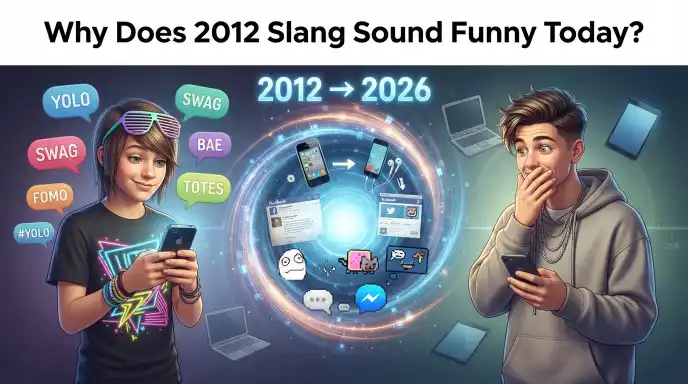
Words that once sounded cool can later become associated with memes, old videos, or exaggerated jokes.
That is why phrases such as:
“YOLO!”
“Swag!”
“That’s so cray!”
may sound intentionally funny today.
People sometimes use old slang to create a 2012 aesthetic or make fun of early-2010s internet culture.
When Should You Use 2012 Slang?
Use these terms mainly when the context is casual.
They can work well for:
- Nostalgic posts
- Memes
- Throwback content
- Informal conversations
- Comedy
- Discussions about early-2010s culture
Avoid using dated slang in:
- Academic writing
- Job applications
- Professional reports
- Formal emails
- Business presentations
Some terms such as DM, FOMO, TBH, and IRL are still common, so they are different from strongly dated words such as totes or cray.
Frequently Asked Questions
What was the most popular slang in 2012?
Some of the most recognizable terms included YOLO, swag, bae, FOMO, cray, derp, turnt, and totes.
What did YOLO mean in 2012?
YOLO meant “You Only Live Once.” People often used it to justify an exciting or risky decision.
Was “bae” popular in 2012?
Yes. Bae became highly visible in early-2010s internet and youth culture and was used for a romantic partner or someone deeply liked.
What did swag mean in 2012?
Swag commonly referred to style, confidence, or being cool.
Is 2012 slang still used?
Some terms remain common, especially FOMO, DM, IRL, and TBH. Others, such as totes and cray, now sound dated or nostalgic.
What social media influenced 2012 slang?
Facebook, Twitter, Tumblr, YouTube, and texting culture all played major roles in spreading early-2010s expressions.
Why does old slang become outdated?
Slang changes as communities create new expressions. Older words can become tied to a specific generation, meme, song, or internet trend.
Conclusion: 2012 Slang
2012 slang captures an important period in internet and youth culture. Words such as YOLO, swag, bae, FOMO, turnt, cray, and derp became recognizable through a mix of music, texting, memes, and social media.
Some expressions survived and remain useful today. Others now sound dated, which makes them perfect for throwback jokes and early-2010s nostalgia.
If you come across an old tweet, Tumblr post, meme, or text from 2012, understanding the slang can make the meaning much easier to follow.
Read More:
- Spanish Slang for White Girl: The Term That Sparks Debate Online
- The Ops Slang: What It Means When Someone Calls You an “Op”
- Slang for Brain: Words That Mean More Than Intelligence

Hi, I’m Sophia Turner, a writer at SlangRise with 7 years of experience researching English slang, internet abbreviations, and modern vocabulary.