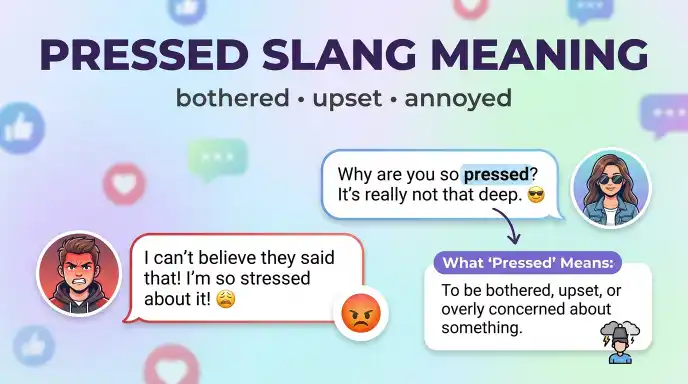
In slang, “pressed” describes someone who feels upset, bothered, annoyed, or overly concerned about something.
People often use it to point out that someone seems too affected by a situation.
In slang, “pressed” usually describes someone who feels upset, bothered, annoyed, or takes something too seriously.
For example, if someone keeps arguing about a small issue, another person might say, “You seem really pressed about this.”
People often use the word online, but they also use it in everyday speech. You may see it on TikTok, Instagram, Reddit, Discord, X, or in private messages.
The tone depends on the situation. Sometimes people use it playfully or to tease someone. In other situations, the word can sound rude because it dismisses someone’s real feelings.
Understanding the context helps you interpret the phrase correctly. A friend may joke when they say “Don’t get pressed,” while a stranger may use “You’re pressed” during an argument to provoke you.
Quick Answer
| Question | Answer |
|---|---|
| Meaning | Upset, bothered, annoyed, or overly concerned |
| Tone | Casual; often teasing |
| Used By | Mainly people using casual or online slang |
| Common Places | Texts, social media, comments, chats |
| Offensive? | Usually not, but it can sound rude |
| Formal? | No; avoid it in formal writing |
| Example | “Why are you so pressed about my post?” |
The key detail is how strongly the speaker means the word. “Pressed” does not always mean someone feels extremely angry. It can describe anything from mild annoyance to a person who seems unusually bothered by an issue.
What Does “Pressed” Mean in Slang?
In slang, “pressed” means bothered, upset, annoyed, or worried about something more than the situation seems to require.
People often use the word to point out that someone reacts strongly to something.
Example:
“He got one bad comment and now he’s pressed.”
This means he became upset because of the comment.
Another common form is:
“Why are you so pressed?”
This can mean:
“Why does this bother you so much?”
People also use the word as a short response:
“Stay pressed.”
This phrase usually sounds teasing. It suggests that the other person will remain bothered while the speaker does not care.
Pressed Meaning in Text Messages
In texting, people often use “pressed” to describe someone who seems bothered by a situation.
You may see phrases such as:
- “Why you pressed?”
- “Don’t get pressed.”
- “You’re so pressed.”
- “Bro is pressed.”
- “She stays pressed.”
- “He looks pressed.”
The exact feeling depends on the conversation.
For example:
Maya: “Why did you unfollow him?”
Jordan: “Why are you so pressed about it?”
Here, Jordan says that Maya seems too concerned about the situation.
In another conversation, someone may use the word more playfully:
“You lost the game and you’re still pressed 😂”
The emoji makes the message feel more like teasing than a serious attack.
Positive or Negative?
Pressed usually carries a negative or teasing meaning.
The word points to feelings such as annoyance, frustration, jealousy, worry, or anger.
However, the word does not always describe serious anger.
Someone can feel:
- mildly bothered
- annoyed
- frustrated
- overly worried
- angry
- defensive
- emotionally affected
The speaker may simply suggest that the person cares too much about the issue.
That is why context matters.
Is “Pressed” Rude?
The word can sound rude, but it does not always sound rude.
If you say:
“Why are you so pressed?”
during a friendly joke, your friend may see it as harmless teasing.
However, if someone shares a serious problem and you reply:
“You’re just pressed.”
your response can sound dismissive.
The phrase can make the other person’s feelings seem unimportant. So, use it more carefully with friends and in casual conversations than in serious or sensitive situations.
Where “Pressed” Is Used
People use “pressed” in many online spaces, and the basic meaning stays similar across platforms.
| Platform | How People Use It | Example |
|---|---|---|
| TikTok | Comments about someone’s reaction | “Why are they so pressed?” |
| Replies and captions | “People stay pressed 😂” | |
| Snapchat | Casual messages | “Don’t get pressed.” |
| Discord | Gaming and group chats | “He’s pressed after that loss.” |
| Discussions and arguments | “Why are you so pressed over this?” | |
| X | Replies and debates | “You seem pretty pressed.” |
| YouTube | Comment sections | “Bro is pressed about a joke.” |
| Private chats | “Why you pressed lol?” |
The word does not belong to just one app. People use it across different platforms, and the meaning stays close to bothered or upset.
Why Do People Say “Pressed”?
People often use “pressed” because it quickly describes someone’s reaction.
Instead of saying:
“You seem unusually bothered by this.”
someone can simply say:
“You’re pressed.”
The shorter phrase sounds casual and direct.
People especially use it during online arguments because the word quickly points out the other person’s emotional reaction.
The word also has a teasing side. Someone may use “pressed” to suggest that another person cares more than they want to admit.
Pressed vs Mad vs Annoyed
These words share similar meanings, but they do not mean exactly the same thing.
| Word | Simple Meaning | Example |
|---|---|---|
| Pressed | Bothered or overly concerned | “Why are you so pressed?” |
| Mad | Angry or upset | “He’s mad about the result.” |
| Annoyed | Slightly angry or bothered | “She is annoyed by the noise.” |
| Bothered | Troubled or concerned | “He seems bothered by the comment.” |
| Upset | Emotionally unhappy | “She was upset after the argument.” |
“Pressed” often adds another idea: the speaker thinks the person reacts too strongly to something.
For example:
“He’s mad.”
This simply describes anger.
“He’s pressed.”
This suggests that his reaction seems strong, unnecessary, or worth pointing out.
Similar Slang Words
Several casual words have meanings similar to “pressed.”
Bothered
Someone who feels bothered feels affected or annoyed by something.
Example:
“She’s bothered by the comments.”
Salty
“Salty” often describes someone who feels upset or bitter after losing, receiving criticism, or not getting what they wanted.
Example:
“Why are you so salty about the game?”
Heated
“Heated” usually describes an angry or emotionally intense situation.
Example:
“The discussion got heated.”
Triggered
In casual online speech, people sometimes use “triggered” to describe someone who feels strongly upset or offended by something. However, the word can also relate to serious mental health experiences, so using it as a joke may sound insensitive.
Mad
“Mad” is a general word for someone who feels angry or upset.
Example:
“He’s mad because they changed the rules.”
Opposite of “Pressed”
No single slang word works as the perfect opposite of “pressed.”
Depending on the situation, you can use:
- unbothered
- calm
- relaxed
- chill
- carefree
- unfazed
People often use unbothered as the online opposite of pressed.
For example:
“They’re pressed. I’m unbothered.”
This means one person feels upset while the other person does not seem affected.
People also use:
“Stay unbothered.”
This phrase encourages someone not to let other people’s actions or comments upset them.
“Pressed” in Different Contexts
The situation can slightly change the meaning of “pressed.”
During an argument:
The word may describe someone who feels angry or defensive.
After losing a game:
It may describe someone who feels salty or upset.
After receiving criticism:
It may describe someone who feels bothered or offended.
During teasing:
It may simply describe someone who reacts strongly.
In a relationship conversation:
It can suggest that someone feels jealous, worried, or overly concerned.
So, look at the full conversation instead of judging the meaning from the word alone.
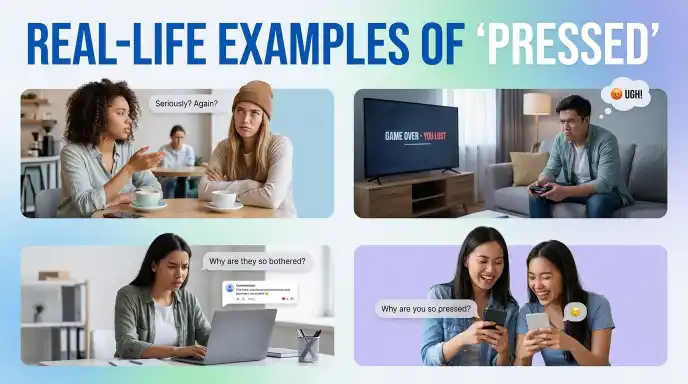
Real-Life Examples of “Pressed”
Text Message
Noah: “Why did you ask who I was talking to?”
Eli: “Why are you so pressed? I was just asking.”
Here, Eli suggests that Noah seems overly concerned.
TikTok Comment
“She deleted the video because the comments got to her. People are so pressed.”
The commenter says that people became bothered or upset by the situation.
Instagram Caption
“Still pressed over a post from three days ago 😂”
This caption playfully suggests that someone still feels bothered by an old situation.
Discord Chat
Kai: “You really left the match after one round?”
Marcus: “I’m not pressed. I had to go.”
Here, Marcus denies feeling upset.
School Conversation
Aiden: “Why are you still talking about the test?”
Leo: “Because I studied all night.”
Aiden: “Okay, don’t get pressed.”
Here, Aiden uses the phrase to tease Leo. The exact tone depends on how the friends normally speak to each other.
Workplace Conversation
You should use the word more carefully at work.
If you tell a coworker:
“Why are you so pressed?”
the coworker may find the comment disrespectful or dismissive.
Instead, you can ask:
“Is something bothering you?”
This question communicates the same general idea without using slang.
Common Mistakes
Mistake 1: Thinking “pressed” always means angry
“Pressed” does not always mean angry.
Someone may feel pressed because they feel annoyed, bothered, worried, jealous, or defensive.
Mistake 2: Using it in formal writing
“Pressed” works as casual slang.
Avoid slang in formal reports, school assignments, business emails, and professional documents unless you discuss slang directly.
Mistake 3: Assuming it is always an insult
Friends can use the word playfully.
For example:
“You’re still pressed about that game 😂”
This sentence may sound like friendly teasing.
Mistake 4: Confusing slang with the normal meaning
“Pressed” also has a normal English meaning.
For example:
“She pressed the button.”
Here, “pressed” has nothing to do with slang.
The context tells you which meaning the speaker intends.
Mistake 5: Using it during a serious conversation
If someone feels genuinely upset, saying “You’re pressed” can make the situation worse.
Instead, use clearer and kinder words when the situation feels serious.
Is “Pressed” Still Used?
Yes, people still understand and use “pressed” in casual online speech. Its frequency can vary by age group, community, platform, and region.
People use the word across different generations and social media platforms.
The phrase “Why are you so pressed?” remains easy to understand because the surrounding context usually makes the meaning clear.
Slang changes quickly. Some expressions become less common over time, while others remain part of everyday online speech. Use “pressed” when the surrounding conversation feels clearly casual.
Can Adults Use “Pressed”?
Yes. Adults can use “pressed” in casual conversations, texts, comments, and social media posts.
The setting matters most.
You can use it naturally with:
- friends
- casual group chats
- social media
- memes
- informal messages
Avoid slang in situations such as:
- job interviews
- formal emails
- academic writing
- official documents
- serious professional discussions
Knowing when to avoid slang is just as useful as knowing what it means.
What Emoji Goes With “Pressed”?
No official emoji represents “pressed.”
People use different emojis to show the mood they want to express.
Common choices include:
- 😂 joking or teasing
- 😭 exaggerated reaction
- 🙄annoyance or sarcasm
- 😒 irritation
- 💀 laughing at someone’s reaction
- 😭😂 playful teasing
For example:
“Why are you so pressed? 😂”
The laughing emoji makes the sentence feel more playful.
Without an emoji, the same phrase may sound more direct or confrontational.
People Also Ask
Is “pressed” a bad word?
No. “Pressed” is not a swear word. People use it as casual slang to describe someone who feels bothered, upset, annoyed, or overly concerned. However, the phrase can sound insulting when someone already feels upset.
Does pressed mean jealous?
It can sometimes suggest jealousy, but jealousy is not the main meaning. “Pressed” has a broader meaning. A person may feel pressed because they feel angry, annoyed, worried, defensive, or jealous. The situation helps you identify the exact feeling.
What does “why are you so pressed?” mean?
It usually means, “Why are you so bothered or upset about this?” The speaker may think the other person takes the situation too seriously. People often use the phrase as teasing or during an online argument.
What does “stay pressed” mean?
“Stay pressed” is a teasing or dismissive phrase. It suggests that the other person can remain upset because the speaker does not care. Friends may use it jokingly, but it can sound rude during a serious argument.
Is pressed positive or negative slang?
“Pressed” usually carries a negative or teasing meaning because it describes someone as bothered, upset, or overly concerned. However, friends may use the word jokingly without trying to hurt anyone.
Is pressed the same as angry?
Not exactly. “Angry” describes strong displeasure, while “pressed” can describe anger, annoyance, worry, jealousy, or defensiveness. The word often focuses on how strongly someone reacts to an issue.
What is the opposite of pressed?
“Unbothered” often works as the closest opposite of “pressed.” Other options include calm, relaxed, chill, carefree, and unfazed.
For example, “They are pressed, but I’m unbothered” means one person feels upset while the other person stays unaffected.
Can I use pressed in a formal email?
Avoid using “pressed” as slang in a formal email. Although many readers may understand it, the word can sound too casual or dismissive. Instead, use words such as concerned, upset, bothered, frustrated, or worried, depending on your meaning.
Key Takeaways
“Pressed” usually means:
- bothered, upset, annoyed, or overly concerned
- common in casual speech, texts, and social media
- often used for teasing or during arguments
- not a swear word, but it can sound rude
- dependent on the situation and tone
Conclusion
The pressed slang meaning is simple: someone feels bothered, upset, annoyed, or more concerned about something than the speaker thinks they should.
You may hear phrases like “Why are you so pressed?”, “Don’t get pressed,” or “He’s still pressed.” People commonly use these phrases in casual conversations and online spaces.
The word does not always describe serious anger. Sometimes people use it for playful teasing. In other situations, it can sound dismissive or rude, especially when someone deals with a real problem.
The best way to understand “pressed” is to look at the context, tone, and relationship between the people talking. Use it with friends and in casual online settings when it fits naturally. For school, work, or serious conversations, choose clearer words such as bothered, upset, annoyed, or concerned.
Read More:
- POS Mean in Slang? 2026 Guide for Parents
- Teener Slang Meaning: What Does Teener Mean?
- Eating Slang Meaning: What Does Eating Mean?

Hi, I’m Sophia Turner, a writer at SlangRise with 7 years of experience researching English slang, internet abbreviations, and modern vocabulary.