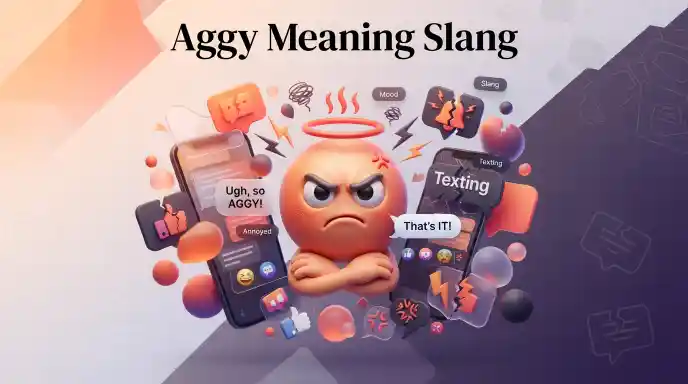
Aggy is a slang word that means aggressive, annoyed, angry, or acting with a bad attitude.People commonly use it to describe someone who is upset, irritated, or easily frustrated.
People often use “Aggy” in text messages, TikTok videos, Instagram comments, Snapchat chats, Discord servers, and everyday conversations.
It is a shortened form of aggravated or aggressive and usually describes someone who is angry, moody, or easily irritated. Depending on the situation, aggy can refer to someone’s behavior, attitude, or emotional state.
Many people search for aggy meaning slang after seeing it on social media or hearing it in conversations. Since the meaning depends on the context, it can sometimes be confusing.
This guide explains what “Aggy” means, shows where people commonly use it, and teaches you how to use it correctly in everyday English.
Quick Answer
Aggy is a slang word that describes someone who is acting angry, irritated, aggressive, or annoyed. It is commonly used in casual conversations and on social media to describe a person’s mood or behavior.
What Does Aggy Mean in Slang?
People use the informal slang word “Aggy” to describe someone who is acting annoyed, angry, or aggressive.
People often use it when someone becomes upset over a small problem or starts behaving with a bad attitude. In many situations, aggy simply means someone is in a bad mood.
Aggy Means Angry or Annoyed
This is the most common meaning of aggy.
Example:
Alex: Why is Jake so quiet today?
Emma: He’s feeling aggy because he lost the game.
Meaning: Jake is annoyed and in a bad mood.
Aggy Means Aggressive
Sometimes aggy describes someone acting aggressively or speaking in a confrontational way.
Example:
“Don’t get aggy over a simple joke.”
Meaning: Don’t become aggressive or angry.
Aggy Means Easily Irritated
People also use aggy when someone gets frustrated very quickly.
Example:
“She’s been aggy all morning.”
Meaning: She has been irritated since the morning.
Full Form of Aggy
Aggy is not an acronym.
People use it as an informal short form of words like aggravated or aggressive, depending on the conversation.
Simple Definition
Aggy: A slang word used to describe someone who is angry, annoyed, irritated, or acting aggressively.
Different Meanings of Aggy
Aggy Means “Angry”
This is the most common meaning.
Example:
“He’s still aggy after the argument.”
Aggy Means “Annoyed”
Sometimes aggy simply means someone is irritated.
Example:
“She gets aggy when people interrupt her.”
Aggy Means “Aggressive”
Aggy can describe someone acting in a hostile or confrontational way.
Example:
“Why are you getting so aggy?”
Aggy Means “In a Bad Mood”
The word can also describe someone who is unhappy or moody.
Example:
“He woke up feeling aggy today.”
Where Is Aggy Commonly Used?
Aggy is popular on social media and in casual conversations, especially among younger people.
Popular Platforms
- TikTok
- Snapchat
- Discord
- X (formerly Twitter)
- Text messages
- Group chats
- Gaming communities
It is commonly used in memes, comments, captions, and private chats to describe someone’s mood or attitude.
Is Aggy Rude, Offensive, or Harmless?
Aggy is generally considered a harmless slang word.
It is not a swear word or offensive term. However, it can sound rude if you use it to criticize someone’s behavior directly.
Is It Appropriate?
| Situation | Appropriate? |
| Friends | ✅ Yes |
| Text Messages | ✅ Yes |
| Social Media | ✅ Yes |
| Gaming Chats | ✅ Yes |
| School Friends | ✅ Yes |
| Workplace Chat | ⚠️ Sometimes |
| Business Emails | ❌ No |
In formal communication, it is better to use words like angry, annoyed, upset, or irritated instead of aggy.
Real-Life Examples of Aggy Slang
Example 1: Text Message
Alex: Why are you so quiet today?
Emma: I’m just feeling a little aggy.
Meaning: Emma is feeling annoyed or upset.
Example 2: TikTok Comments
User 1: Why is everyone getting aggy in the comments?
User 2: It’s just a misunderstanding.
Meaning: People are becoming angry while commenting.
Example 3: Gaming Chat
Player 1: We lost again.
Player 2: Don’t get aggy. We’ll win the next match.
Meaning: Don’t become angry or frustrated.
Example 4: School Conversation
Ben: Why did Jake leave so early?
Tom: He got aggy after the teacher corrected him.
Meaning: Jake became annoyed.
Example 5: Group Chat
Sarah: Relax. Nobody is blaming you.
Lily: Sorry, I got a bit aggy.
Meaning: Lily admits she became irritated.
Can You Use Aggy at School or Work?
Aggy is suitable for casual conversations but not for formal communication.
Good Places to Use Aggy
- Text messages
- Social media
- Gaming chats
- Discord servers
- Snapchat conversations
- Talking with friends
Avoid Using Aggy In
- Business emails
- Professional meetings
- Job interviews
- School assignments
- Formal presentations
- Official documents
In formal situations, use words like angry, annoyed, irritated, or upset instead.
Origin and History of Aggy Slang
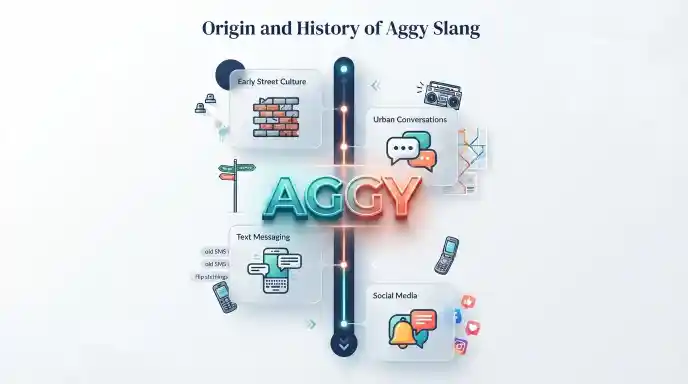
Aggy is a shortened form of aggravated or aggressive. It first became popular in British urban slang and later spread through music, texting, and social media.
As platforms like TikTok, Instagram, Snapchat, and X (formerly Twitter) grew, people started using aggy because it was shorter and easier to type than words like aggravated or aggressive.
Today, the slang is widely recognized in online conversations and is commonly used to describe someone’s mood or attitude.
Similar Slang
Salty
Means annoyed or upset because something did not go your way.
Mad
Means angry.
Heated
Means becoming very angry during a discussion.
Pressed
Means overly bothered or upset about something.
Moody
Means being in a bad mood.
Cranky
Means easily irritated or annoyed.
When Should You Avoid Using Aggy?
Although aggy is a harmless slang term, it is not suitable everywhere.
Avoid using aggy in:
- Business emails
- Job applications
- Academic writing
- Professional meetings
- Formal presentations
- Official reports
If your audience may not understand internet slang, use standard English instead.
Better Alternatives
Instead of Aggy, You Can Say
- Angry
- Annoyed
- Irritated
- Upset
- Frustrated
- Moody
- Cross
- Bad-tempered
These words are easier to understand in formal and professional settings.
Why Do People Use Aggy?
People use aggy because it is quick, expressive, and commonly understood in online conversations.
Common Reasons
- It is short and easy to type.
- It describes someone’s mood quickly.
- It is popular on social media.
- It sounds more casual than “aggravated.”
- It is commonly used in texting and memes.
- It makes conversations feel more natural.
Common Misunderstandings
Mistake 1: Thinking Aggy Is an Acronym
Aggy is not an acronym. It is simply a shortened slang word.
Mistake 2: Thinking Aggy Always Means Angry
Aggy can also mean annoyed, irritated, aggressive, or simply in a bad mood.
Mistake 3: Using Aggy in Professional Writing
Aggy is internet slang and should not be used in formal communication.
Mistake 4: Ignoring Context
The exact meaning depends on the conversation. Sometimes it describes anger, while other times it simply means someone is irritated.
Frequently Asked Questions
1. What does aggy mean in slang?
Aggy is a slang word that means someone is angry, annoyed, irritated, or acting aggressively. It is commonly used in casual conversations and on social media.
2. Is aggy rude?
No. Aggy is generally a harmless slang word. However, calling someone aggy may sound rude if it is used to criticize their behavior.
3. Where is aggy commonly used?
Aggy is commonly used on TikTok, Instagram, Snapchat, Discord, Reddit, X (formerly Twitter), gaming chats, and text messages.
4. Is aggy an acronym?
No. Aggy is not an acronym. It is a shortened form of aggravated or aggressive.
5. Can I use aggy at work?
It is better to avoid aggy in professional communication. Use words like angry, annoyed, or upset instead.
6. Is aggy a British slang word?
Yes. Aggy is believed to have originated in British slang before becoming popular in online conversations around the world.
7. Does aggy always mean angry?
No. Depending on the context, aggy can also mean irritated, aggressive, frustrated, or in a bad mood.
8. What does aggy mean in texting?
In texting, aggy means someone is angry, annoyed, irritated, or in a bad mood. It is often used when a person seems upset or reacts negatively to something.
9. What does it mean to get aggy?
To get aggy means to become angry, annoyed, or aggressive because of a situation or someone’s actions.
10. What does it mean if someone calls you aggy?
If someone calls you aggy, they usually mean you are acting annoyed, angry, moody, or aggressive. It often refers to your attitude rather than your personality.
11. How is aggy used in slang?
In slang, aggy is used to describe someone who is upset, frustrated, aggressive, or easily annoyed. It is common in text messages, social media, gaming chats, and everyday conversations.
12. Is aggy popular on TikTok?
Yes. Aggy is frequently used on TikTok in videos, captions, comments, and memes to describe someone acting annoyed or getting angry.
13. Can aggy describe someone’s mood?
Yes. People often use aggy to describe someone who is feeling irritated, upset, or in a bad mood.
14. Is aggy the same as aggressive?
Not always. Aggy can mean aggressive, but it can also simply mean annoyed, frustrated, or moody. The exact meaning depends on the context.
Conclusion
Aggy is a popular slang word used to describe someone who is angry, annoyed, irritated, or acting aggressively. It is widely used on TikTok, Instagram, Discord, Snapchat, Reddit, and in text messages because it is short and easy to understand. Although it is suitable for casual conversations, it should be avoided in formal communication. Understanding the context will help you know exactly what aggy means and when it is appropriate to use it.
Discover More Article:
- The Secret Language of League of Legends Players
- Blue Slang Meaning: More Than Just a Color
- Cray Meaning Slang: The Real Meaning Behind This Popular Word
- GOATED Slang Meaning: Popular Use in Sports and Social Media

Hi, I’m Olivia Carter. I enjoy researching English slang, online expressions, and everyday vocabulary. I write clear, beginner-friendly guides with simple definitions and practical examples to make modern English easier to understand.