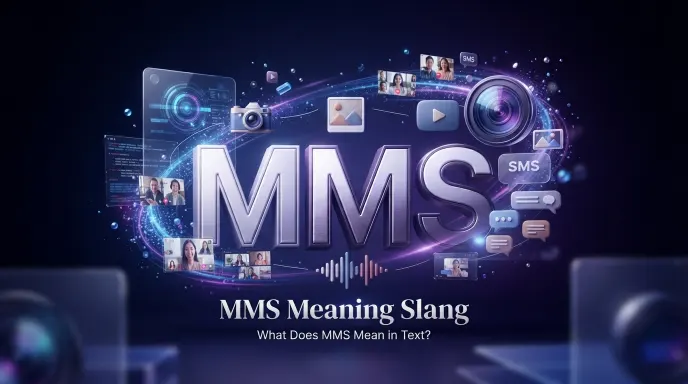
MMS is a technical term standing for “Multimedia Messaging Service,” letting users send photos, videos, and audio through text, though on Snapchat and TikTok it’s also slang for “Made Me Smile.”
Unlike SMS, which only sends plain text, MMS allows richer content to be shared directly through a phone’s messaging app.
In casual chats and social media comments, though, MMS often takes on the friendlier “Made Me Smile” meaning, especially in response to something sweet or funny.
In this guide, you’ll learn both meanings of MMS, how they differ, and how to tell which one applies based on the conversation.
Quick Answer
MMS usually means “Multimedia Messaging Service” in texting. In slang, its meaning can vary by context and online community.
What Does MMS Mean in Slang?
Unlike common slang words, MMS is mainly an abbreviation rather than a slang word.
In mobile messaging, MMS means Multimedia Messaging Service. It allows people to send messages containing media such as images, videos, or audio.
For example:
- “Send it by MMS.”
- “My phone sent the photo as an MMS.”
- “I got an MMS with a picture.”
In some online communities, MMS may have other informal meanings, so context matters.
Word at a Glance
| Feature | Details |
| Word | MMS |
| Part of Speech | Abbreviation |
| Pronunciation | M-M-S |
| Common Meaning | Multimedia Messaging Service |
| Tone | Neutral / Informal |
| Common Contexts | Texting, mobile phones, online chats |
| Related Words | SMS, text, message, DM |
What Does MMS Stand For?
MMS stands for “Multimedia Messaging Service.”
It is a messaging system designed to send media through mobile networks.
Unlike SMS, which mainly supports text, MMS was designed to support multimedia content.
Is MMS Rude, Offensive, or Neutral?
MMS is generally neutral.
The standard meaning has nothing offensive about it. If someone uses MMS as slang for something else, the tone depends on that particular context.
Where Is MMS Commonly Used?
You may see MMS in:
- Text messages.
- Mobile phone settings.
- Messaging apps.
- Online discussions.
- Tech conversations.
- Social media posts.
The standard meaning is especially common when discussing older mobile messaging systems.
Why Do People Use MMS?
People use MMS because it is a short way to refer to Multimedia Messaging Service.
It is useful when discussing:
- Picture messages.
- Video messages.
- Mobile messaging.
- Phone settings.
- Messaging technology.
Although newer apps have replaced MMS for many users, the abbreviation is still widely recognized.
Real-Life Examples of MMS Slang Usage
The meaning of MMS depends on the context. In most texting and mobile-phone conversations, it refers to Multimedia Messaging Service.
Friendly Examples
Friends may use MMS when talking about sending pictures or videos.
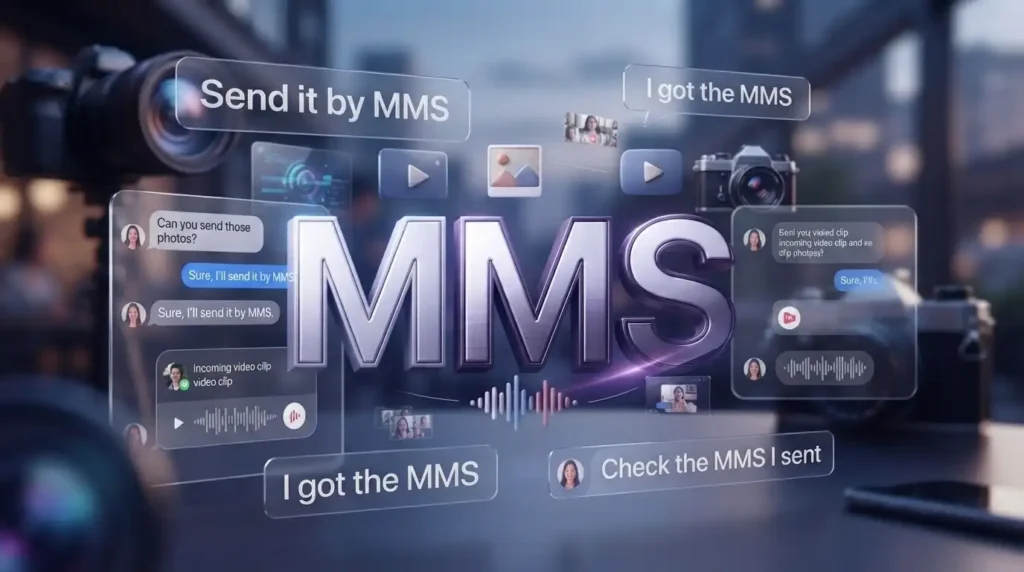
- “I sent you an MMS with the photos.”
- “Did you get my MMS?”
- “My phone sent it as an MMS.”
- “Check your MMS when you can.”
Casual Examples
MMS can also appear in everyday conversations about mobile messaging.
- “Why did my text turn into an MMS?”
- “The video was sent through MMS.”
- “My phone can’t send MMS right now.”
- “I received an MMS from an unknown number.”
Social Media Examples
People may mention MMS when discussing older mobile messaging or phone features.
- “Does your phone still support MMS?”
- “I remember sending photos by MMS.”
- “MMS was common before messaging apps became popular.”
- “The phone settings include an MMS option.”
Origin and Background of MMS
MMS stands for Multimedia Messaging Service. It was developed as an extension of SMS to allow mobile users to send more than plain text.
While SMS focuses mainly on text messages, MMS supports multimedia content such as:
- Images.
- Short videos.
- Audio.
- Longer multimedia messages.
MMS became widely used before internet-based messaging apps became common. Today, services such as iMessage, WhatsApp, Messenger, and similar apps are often used instead.
Comparison With Similar Terms
MMS is often confused with other messaging abbreviations.
Key Differences
| Term | Meaning | Common Use |
| MMS | Multimedia Messaging Service | Pictures and media |
| SMS | Short Message Service | Text messages |
| DM | Direct Message | Social media |
| PM | Private Message | Online communication |
| RCS | Rich Communication Services | Modern mobile messaging |
Comparison Table
| Term | Main Purpose | Example |
| MMS | Send multimedia through mobile networks | “I sent an MMS.” |
| SMS | Send text messages | “Send me an SMS.” |
| DM | Private social media message | “Check your DMs.” |
| PM | Private online message | “Send me a PM.” |
| RCS | Modern rich mobile messaging | “My phone supports RCS.” |
When to Avoid Using MMS Slang
If you are talking about mobile messaging, MMS is clear to many people. However, avoid using the abbreviation without explanation when your audience may not know it.
For example, instead of:
“Send it through MMS.”
you can say:
“Send it as a multimedia message.”
This is clearer for people who are unfamiliar with the abbreviation.
Polite Alternatives to MMS
Depending on the context, you can use:
| MMS | Alternative |
| MMS | Multimedia message |
| MMS message | Picture or video message |
| Send by MMS | Send as a multimedia message |
| MMS settings | Multimedia messaging settings |
Impact of Using MMS in Communication
Using MMS keeps messages short and is useful when discussing mobile technology.
It can make communication:
- Faster.
- More precise.
- Easier for technical discussions.
- Familiar to mobile users.
However, younger users may be more familiar with app-based messaging terms than MMS because many modern messaging services use internet connections instead.
Is MMS Safe for Social Media?
Yes. MMS is a neutral messaging term and is generally safe to discuss on social media.
It may appear in conversations about:
- Mobile phones.
- Text messaging.
- Phone settings.
- Messaging history.
- Communication technology.
If MMS is being used with a different slang meaning, check the surrounding context before interpreting it.
Frequently Asked Questions About MMS Meaning Slang
1. What does MMS mean in slang?
MMS is mainly an abbreviation for Multimedia Messaging Service. In texting, it usually refers to a message that can contain media such as pictures or videos.
2. What does MMS stand for?
MMS stands for “Multimedia Messaging Service.” It is a mobile messaging technology that supports multimedia content.
3. Is MMS the same as SMS?
No. SMS mainly refers to text messaging, while MMS was designed to support multimedia such as images, videos, and audio.
4. Is MMS a slang word?
Not really. MMS is primarily a messaging abbreviation, rather than traditional slang. Some online communities may give abbreviations different meanings, so context still matters.
5. Where is MMS commonly used?
MMS may appear in:
- Text messages.
- Phone settings.
- Mobile technology discussions.
- Online forums.
- Social media.
- Messaging-related conversations.
6. Why does my phone say MMS instead of SMS?
A message may be sent as MMS when it contains multimedia, such as an image or video. Certain message types or carrier settings can also cause a message to be handled as MMS.
7. Is MMS still used today?
Yes. MMS is still supported by many mobile networks, although internet-based messaging apps are much more common for sharing photos, videos, and other media.
Conclusion
MMS meaning slang can be confusing because MMS is mainly a messaging abbreviation, not a traditional slang word. Its standard meaning is Multimedia Messaging Service, a system that allows mobile users to send messages containing images, videos, audio, and other media.
MMS became popular before modern internet messaging apps became widespread. Today, people may still see MMS in phone settings, text conversations, and discussions about mobile technology.
If you see MMS in a message, the standard meaning is usually Multimedia Messaging Service. However, context is always useful if the abbreviation appears in a specific online community.
Read more:
- Ate Mean Slang: Slaying, Serving & Everything Between
- What Does Brat Mean in Slang: Charli XCX’s Iconic Vibe
- OMS Slang Meaning: Emotion, Honesty, or Both?

Hi, I’m Sophia Turner, a writer at SlangRise with 7 years of experience researching English slang, internet abbreviations, and modern vocabulary.