Growing up in the Bay Area means growing up with a vocabulary all its own words like “hella,” “hyphy,” and “finna” that rarely make sense anywhere else.
“Hella” is Northern American slang probably shortened from “helluva” or “hellacious,” used to mean “very” or “a lot,” as in “that game was hella cool.
“Good looks” is a shortened version of “good looking out,” used to show appreciation when someone helps you out, while “hyphy” describes being hyper or excited, tied closely to the region’s hip-hop culture.
In this guide, you’ll explore the words that define everyday conversation across the Bay from Oakland to San Francisco to the surrounding suburbs.
Quick Answer
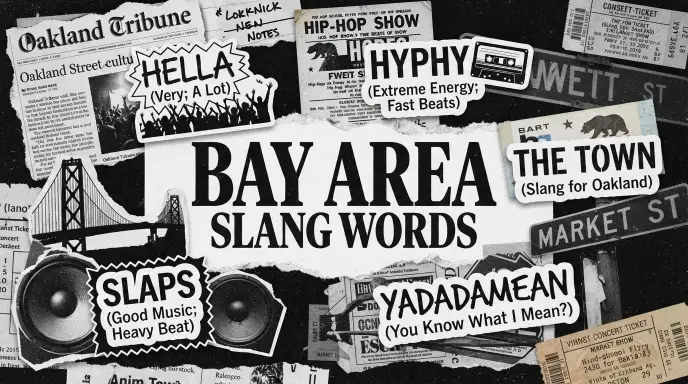
Bay Area slang words are informal expressions associated with Northern California’s Bay Area. Common examples include hella, hyphy, the Town, 415, 510, slaps, and yadadamean.
What Are Bay Area Slang Words?
Bay Area slang includes words and phrases that developed or became popular in communities around San Francisco and the East Bay.
Some terms describe a person’s mood or behavior. Others refer to local places, music, cars, or the Bay Area itself.
Examples include:
- Hella means very or a lot.
- Hyphy describes an energetic, wild, or excited style.
- The Town a nickname for Oakland.
- 415 a number strongly associated with San Francisco.
- 510 an area code associated with Oakland and parts of the East Bay.
- Slaps means something is very good, especially music.
- Yadadamean a casual form of “you know what I mean?”
Word at a Glance
| Feature | Details |
| Term | Bay Area slang words |
| Type | Regional slang |
| Region | San Francisco Bay Area, California |
| Tone | Casual and informal |
| Common Contexts | Music, texting, social media, everyday speech |
| Major Influences | Hip-hop, local communities, car culture |
| Related Terms | California slang, San Francisco slang, Oakland slang |
Popular Bay Area Slang Words
The Bay Area has a long history of creating and spreading unique expressions. Here are some of the better-known terms.
Hella
Hella means very or a lot.
Example:
“That concert was hella good.”
The word became strongly associated with Northern California, although people now use it in many other places.
Hyphy
Hyphy describes an energetic, wild, or highly excited style. The word became closely connected with Bay Area hip-hop and music culture.
Example:
“The crowd got hyphy when the DJ started playing.”
The Town
The Town is a nickname for Oakland, California.
Example:
“He grew up in the Town.”
The expression has strong cultural ties to Oakland.
415
415 refers to the San Francisco telephone area code. People may use it as a cultural reference to San Francisco.
Example:
“She represents the 415.”
510
510 refers to a telephone area code associated with Oakland and other parts of the East Bay.
Example:
“He’s from the 510.”
Slaps
Slaps means something is really good, especially a song or piece of music.
Example:
“This track slaps.”
Although the term is now widely used, it is common in music and youth slang.
Yadadamean
Yadadamean is a casual pronunciation of “you know what I mean?”
Example:
“We were just chilling, yadadamean?”
It is strongly associated with informal Bay Area speech and music.
Why Is Bay Area Slang Popular?
The Bay Area has had a major influence on American music and culture.
Oakland and San Francisco have produced influential artists, musicians, athletes, and cultural movements. Bay Area hip-hop, especially the hyphy movement, helped introduce many local expressions to listeners outside Northern California.
Social media later helped these terms reach an even wider audience.
Where Is Bay Area Slang Used?
You may encounter Bay Area slang in:
- Everyday conversations.
- Text messages.
- Rap and hip-hop.
- TikTok.
- Instagram.
- YouTube.
- Reddit.
- Gaming chats.
- Local events.
- Music lyrics.
Some expressions are strongly regional, while others have become common across the United States.
Is Bay Area Slang the Same as California Slang?
No. Bay Area slang is a regional form of California slang.
California is a large state with many different cultures and speech patterns. The Bay Area has its own expressions that may not be common in Los Angeles, San Diego, or other parts of Southern California.
For example, hyphy has a particularly strong connection to Bay Area music and culture.
At the same time, words such as hella and slaps are now used far beyond the Bay Area.
How Did Music Influence Bay Area Slang?
Music played a major role in spreading Bay Area expressions.
The hyphy movement helped popularize words connected with energetic music, dancing, cars, and street culture. Artists from Oakland and other Bay Area communities brought local language into their music, helping audiences outside the region recognize these expressions.
As Bay Area music reached national audiences, some local slang became part of wider American internet and youth culture.
Is Bay Area Slang Still Used Today?
Yes. Bay Area slang continues to change.
Older expressions remain connected to local culture, while newer terms spread through social media, music, and younger speakers.
Some words may also change meaning over time. A term that once sounded strongly regional may eventually become common across the country.
For this reason, Bay Area slang is not one fixed list of words. It continues to develop with the region’s communities and culture.
Real-Life Examples of Bay Area Slang Words
Bay Area slang often appears in casual speech, music, texting, and social media. The meaning of a word can depend on the speaker and the local community.
Friendly Examples
Friends may use Bay Area slang to sound relaxed and familiar.
- “That song is hella good.”
- “What’s up, homie?”
- “We’re heading to the Town.”
- “This track slaps.”
- “Yadadamean?”
These expressions are informal and work best in casual conversations.
Casual Examples
You may also hear Bay Area slang when people talk about music, places, or everyday life.
- “That party was hella fun.”
- “He’s from the 510.”
- “She represents the 415.”
- “That beat slaps.”
- “Everyone got hyphy at the show.”
Social Media Examples
Bay Area expressions can appear in captions, comments, videos, and music posts.
- “This song hella slaps.”
- “Oakland in the Town.”
- “510 all day.”
- “That party got hyphy.”
- “Yadadamean 😂.”
You may see these expressions on:
- TikTok
- YouTube
- X
- Snapchat
Origin and Background of Bay Area Slang
Bay Area slang has developed through many local communities over several decades.
Oakland and San Francisco have had a major influence on regional language. Black communities, Chicano communities, hip-hop, car culture, and local neighborhood identities have all helped shape the vocabulary.
The hyphy movement was especially important. It developed in the Bay Area hip-hop scene and helped spread local words, sounds, and cultural ideas to audiences outside Northern California.
Music, movies, sports, and social media later helped introduce more Bay Area expressions to the rest of the country.
Popular Bay Area Slang Words
| Slang | Meaning | Common Context |
| Hella | Very / a lot | Everyday speech |
| Hyphy | Wild, energetic, excited | Music / parties |
| The Town | Oakland | Local identity |
| 415 | San Francisco area | Local identity |
| 510 | East Bay area | Local identity |
| Slaps | Very good | Music |
| Yadadamean | You know what I mean? | Casual speech |
| Scraper | Customized car | Car culture |
| Giggin’ | Having fun / enjoying yourself | Casual speech |
| Thizz | Term linked to Bay Area music culture | Music / culture |
Some of these terms are now used outside the Bay Area, so they are not all exclusive to Northern California.
Comparison With Similar California Slang
Bay Area slang is sometimes confused with slang from Southern California.
Key Differences
| Region | Examples | Cultural Association |
| Bay Area | Hyphy, the Town, 510, 415 | Oakland and San Francisco culture |
| Los Angeles | Foo, homie, the 213 | LA communities |
| San Diego | Dude, bro, beach slang | Surf and beach culture |
| California broadly | Hella, fire, slaps | Wider California / U.S. use |
There is overlap between these regions, but some words have stronger local connections.
Comparison Table
| Bay Area Term | Meaning | Standard Alternative |
| Hella | Very / a lot | Very / extremely |
| Hyphy | Wild or energetic | Excited / energetic |
| The Town | Oakland | Oakland |
| 415 | San Francisco area | San Francisco |
| 510 | East Bay area | East Bay |
| Slaps | Very good | Excellent |
| Yadadamean | You know what I mean? | Do you understand? |
| Scraper | Customized car | Customized car |
When to Avoid Using Bay Area Slang
Bay Area slang is mainly informal, so it may not fit formal situations.
Avoid using unfamiliar slang when:
- Writing academic assignments.
- Preparing a business report.
- Sending professional emails.
- Speaking in a formal meeting.
- Writing for an audience unfamiliar with California slang.
A regional word can confuse readers who have never heard it before.
Polite Alternatives to Bay Area Slang
You can replace informal expressions with standard English.
| Bay Area Slang | Clear Alternative |
| Hella | Very / a lot |
| Hyphy | Energetic / excited |
| The Town | Oakland |
| 415 | San Francisco |
| 510 | East Bay |
| Slaps | Very good |
| Yadadamean | You know what I mean? |
| Giggin’ | Having fun |
These alternatives make your writing easier for a wider audience to understand.
Impact of Bay Area Slang on Communication
Bay Area slang gives conversations a strong sense of local identity.
It can:
- Show where someone is from.
- Create a sense of community.
- Make speech sound casual.
- Add personality to conversations.
- Connect people through shared culture.
However, using a regional expression without understanding its meaning can sound unnatural.
Some terms also have cultural histories that go beyond their dictionary definitions. Learning the background can help you use them more respectfully.
Is Bay Area Slang Safe for Social Media?
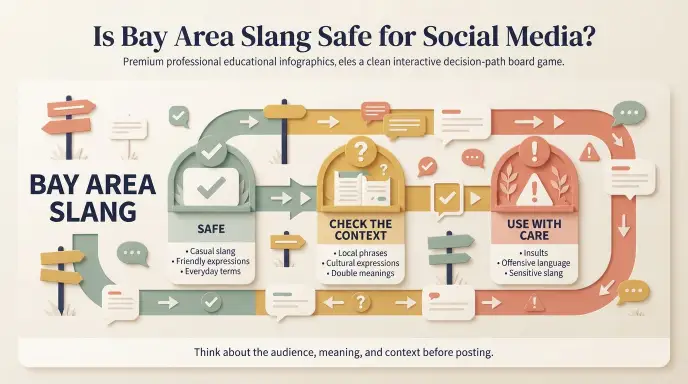
Most Bay Area slang is fine for casual social media use. Words such as hella, slaps, and hyphy are generally harmless.
However, some expressions may be strongly connected to specific communities or cultural movements. It is better to understand their background before using them.
For educational or public content, explain unfamiliar terms clearly instead of assuming everyone knows them.
FAQs About Bay Area Slang Words
1. What are Bay Area slang words?
Bay Area slang words are informal expressions connected to the San Francisco Bay Area, especially places such as San Francisco and Oakland. The region’s music, neighborhoods, and diverse communities have shaped many of these terms.
2. What is the most famous Bay Area slang?
Hella is one of the best-known expressions associated with Northern California and the Bay Area. It means “very” or “a lot.”
Example:
“That food was hella good.”
3. What does “hyphy” mean in Bay Area slang?
Hyphy describes something wild, energetic, or highly excited. The word is strongly connected to the Bay Area hip-hop movement that developed around Oakland and nearby communities.
4. What does “the Town” mean?
The Town is a nickname for Oakland, California. It is an important part of Oakland’s local identity and is commonly heard in music and casual speech.
5. What does 415 mean in Bay Area slang?
415 refers to a telephone area code strongly associated with San Francisco. People may use it as a cultural reference to the city.
6. What does 510 mean in Bay Area slang?
510 is a telephone area code associated with Oakland and parts of the East Bay. People sometimes use the number to show their connection to the area.
7. What does “slaps” mean?
Slaps means something is really good or enjoyable, especially a song.
Example:
“This track slaps.”
The expression is now used widely outside the Bay Area too.
8. What does “yadadamean” mean?
Yadadamean is an informal way of saying “you know what I mean?”
It is commonly associated with Bay Area speech and hip-hop culture.
9. Is Bay Area slang the same as San Francisco slang?
Not exactly. San Francisco slang is part of the broader Bay Area slang scene, but the Bay Area also includes Oakland, San Jose, the East Bay, the Peninsula, and other communities.
Different areas can have their own expressions.
10. Is Bay Area slang the same as LA slang?
No. Bay Area and Los Angeles slang have some overlap, but they also have different cultural influences.
For example, hyphy has a strong connection to Bay Area culture, while expressions such as foo are more strongly associated with Southern California and Los Angeles.
11. Where can I hear Bay Area slang?
You may hear Bay Area slang in:
- Everyday conversations.
- Hip-hop and rap.
- TikTok.
- Instagram.
- YouTube.
- Reddit.
- Gaming chats.
- Local events.
- Movies and online videos.
12. Why is Bay Area slang important?
Bay Area slang reflects the region’s local identity and cultural history. Music, community, and neighborhood culture have helped create expressions that are recognizable far beyond Northern California.
13. Is Bay Area slang still popular?
Yes. Some older terms remain strongly connected to local culture, while newer expressions continue to appear through music and social media.
Not every term is used by every person in the Bay Area, so usage can vary by age, location, and community.
Conclusion
Bay Area slang words reflect the diverse culture and history of Northern California. Expressions such as hella, hyphy, the Town, 415, 510, slaps, and yadadamean are some of the best-known examples.
Some terms are closely connected to Oakland or San Francisco, while others have spread far beyond the Bay Area through hip-hop, social media, and popular culture.
If you hear a Bay Area slang word you do not recognize, look at the surrounding conversation. Context, location, and tone can help you understand what the speaker means.
Learning these expressions can also give you a better understanding of Bay Area music, local identity, and everyday communication.
Read More:
- Manchester Slang: Mad for It, Mint & Everything Between
- Southern Slang Insults: Funny Sayings and Their Meanings
- Wagon Irish Slang: Why This Word Means So Much More

Hi, I’m Sophia Turner, a writer at SlangRise with 7 years of experience researching English slang, internet abbreviations, and modern vocabulary.